



What's Happening?
The International Association of Classification Societies (IACS) has published the results of its Concentrated Inspection Campaign on Emergency Power Supply Tests conducted on ships throughout 2025. This campaign was initiated in response to concerns
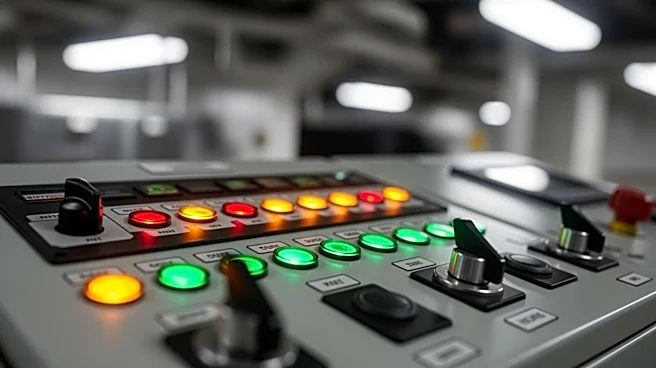
from the Tokyo MoU regarding the reliability of 'simulated blackout' tests in demonstrating compliance with the Safety of Life at Sea (SOLAS) requirements. Over the course of the year, inspections were carried out on 36,723 ships, revealing deficiencies in 853 cases, which is about 2.32% of the total. The campaign identified several critical equipment failure points, including issues with quick-closing valves, control units, and emergency diesel generator starting arrangements. Additionally, non-equipment deficiencies such as inadequate blackout test procedures in Safety Management Systems were noted. The findings highlight the need for improved maintenance, installation quality, and crew training to ensure compliance with SOLAS standards.
Why It's Important?
The findings from the IACS inspection campaign are significant as they underscore the importance of reliable emergency power systems on ships, which are crucial for safety at sea. The identified deficiencies could potentially compromise the safety of vessels and their crews, highlighting a need for industry-wide improvements in equipment maintenance and crew training. The recommendations from IACS aim to enhance compliance with SOLAS requirements, thereby improving the overall safety standards in the maritime industry. This is particularly important for the U.S. and other countries relying on maritime transport for trade and economic activities, as it ensures the safety and reliability of shipping operations.
What's Next?
IACS plans to conduct further analyses to clarify inspection and testing cycles for high-frequency malfunction components and to standardize design standards for emergency generator simulation tests. These steps are intended to ensure that emergency power systems on ships are fully compliant with SOLAS requirements. The maritime industry may see increased scrutiny and possibly new regulations to address the identified deficiencies. Ship operators and classification societies will likely need to enhance their training programs and maintenance protocols to meet these standards.