
What's Happening?
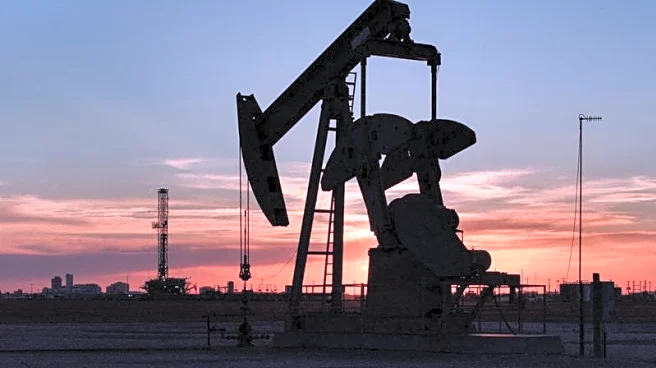
The International Energy Agency (IEA) has announced the release of 400 million barrels of oil from emergency reserves to address supply challenges caused by the ongoing conflict in the Middle East. This decision comes as the global oil supply has been
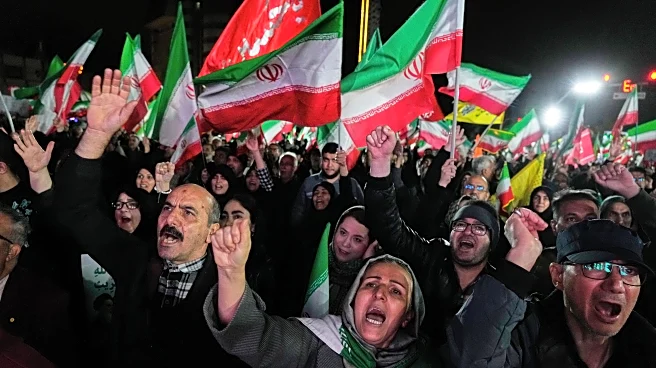
significantly disrupted, with a reduction of about 8% due to the near-total closure of the Strait of Hormuz, a critical chokepoint for oil and gas shipments. The IEA's action aims to mitigate the current shortfall, which has been reduced from 11 million barrels a day to 8 million barrels. The United States has also temporarily suspended sanctions on Russian and Iranian oil already at sea to alleviate the supply shortage. Despite these efforts, the conflict has caused damage to over 40 energy installations in nine Middle Eastern nations, potentially affecting long-term supply stability.
Why It's Important?
The release of oil reserves by the IEA is crucial in preventing a sharp rise in oil prices, which could have significant economic repercussions globally. The current situation echoes the oil crises of the 1970s, which led to stagflation in many Western economies. By stabilizing oil supply and prices, the IEA's actions aim to prevent similar economic disruptions. The temporary suspension of sanctions on Russian and Iranian oil by the U.S. highlights the geopolitical complexities involved in maintaining energy security. The ongoing conflict and its impact on energy infrastructure underscore the vulnerability of global energy markets to geopolitical tensions, emphasizing the need for diversified energy sources and strategic reserves.
What's Next?
The duration of the Middle East conflict remains uncertain, and its resolution will significantly impact future oil supply and prices. If the conflict persists, further damage to energy infrastructure could exacerbate supply shortages. The IEA and other stakeholders may need to consider additional measures to manage the situation. The global economy is already experiencing inflationary pressures and potential slowdowns in industrial production due to reduced oil consumption. Countries may need to implement energy-saving measures to cope with the situation. The outcome of ongoing diplomatic efforts, including talks between the U.S. and Iran, will be critical in determining the conflict's resolution and its impact on global energy markets.
Beyond the Headlines
The current crisis highlights the strategic importance of the Strait of Hormuz and the potential for geopolitical conflicts to disrupt global energy supplies. It also underscores the need for countries to build and maintain strategic reserves to buffer against such disruptions. The situation may accelerate the transition to alternative energy sources as countries seek to reduce dependence on volatile regions. Additionally, the conflict raises ethical and legal questions about the use of strategic reserves and the balance between energy security and geopolitical considerations.