



What's Happening?
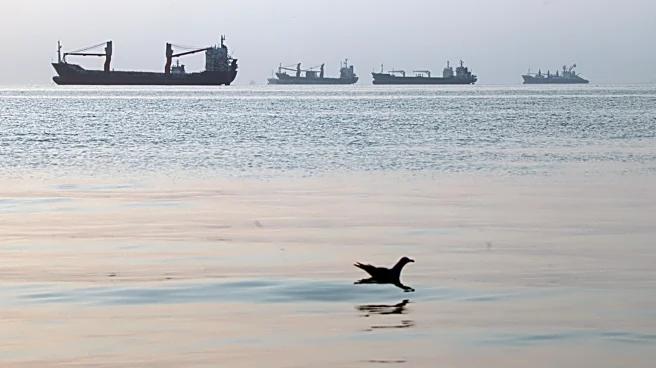
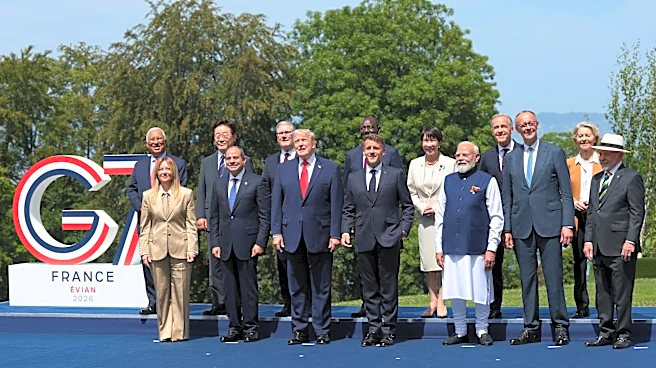
Foreign ministers from the Group of Seven (G7) nations have issued a joint declaration strongly condemning Iran's obstruction of transit through the Strait of Hormuz and the continued strikes carried out by Houthis in Yemen against Saudi Arabia. This
condemnation was part of a broader statement following their meeting in Paris. The G7 ministers expressed solidarity with the governments of Yemen and Saudi Arabia and recognized the importance of Gulf security, particularly given that over 75% of EU imports from Gulf Cooperation Council countries are energy products. The declaration also endorsed two European-led security mechanisms in the Gulf: a multinational, independent, and defensive initiative led by France and the UK, and the EU maritime defensive operations EUNAVFOR ASPIDES and EUNAVFOR ATALANTA. The G7 called on Iran to cease its support for non-state armed groups.
Why It's Important?
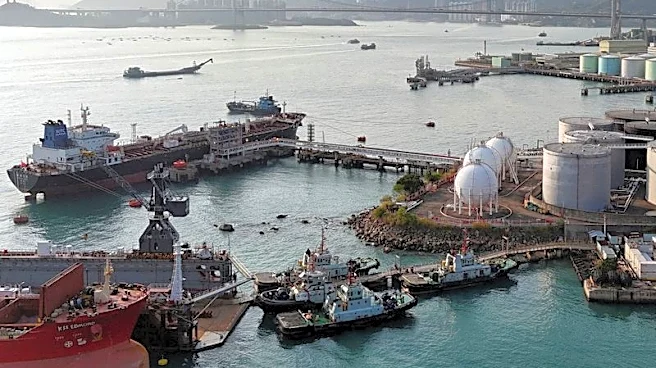
The G7's strong condemnation highlights the critical importance of maritime security in the Strait of Hormuz, a vital chokepoint for global oil supplies, and the broader stability of the Gulf region. For the United States, ensuring freedom of navigation and deterring aggression in this region is a key strategic interest, as disruptions can significantly impact global energy markets and the world economy. The G7's unified stance against Iran's actions and Houthi attacks underscores a collective commitment to regional security and the protection of international shipping lanes. This coordinated diplomatic pressure aims to de-escalate tensions and prevent further conflict, which could have severe economic and geopolitical consequences for the U.S. and its allies. The endorsement of European security initiatives also signals a multilateral approach to addressing these threats.
What's Next?
Following this declaration, the G7 nations are expected to continue diplomatic efforts to pressure Iran to cease its obstruction in the Strait of Hormuz and its support for non-state armed groups. The endorsement of European security mechanisms suggests a potential increase in naval presence and surveillance in the Gulf to protect shipping. Saudi Arabia, whose Foreign Minister Prince Faisal bin Farhan recently attended the EU Foreign Affairs Council, will likely continue to advocate for international action against Houthi attacks, including potentially pushing for the designation of Houthis as a terrorist organization. The termination of the U.S.-Iran diplomatic channel further emphasizes the role of European states in maintaining any remaining diplomatic presence in Tehran, making their actions and G7 coordination even more critical in managing regional tensions.
Beyond the Headlines
The G7's statement on Gulf security delves into the complex interplay of energy security, regional conflicts, and international law. The condemnation of Iran's actions and Houthi attacks raises ethical questions about state-sponsored aggression and the protection of civilian populations and international commerce. The emphasis on freedom of navigation underscores a fundamental principle of international maritime law, which is being challenged in the Strait of Hormuz. This situation could lead to a long-term re-evaluation of international security frameworks in the Middle East, potentially fostering stronger alliances and coordinated defense strategies among Gulf states and Western powers. The economic implications, particularly for energy markets, highlight the vulnerability of global supply chains to regional instability, prompting a renewed focus on diversifying energy sources and securing critical trade routes.