


What's Happening?
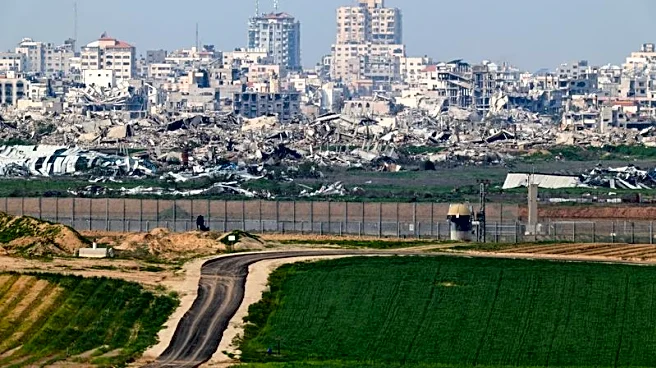
A new plan for Gaza, spearheaded by President Trump and involving his son-in-law Jared Kushner, is facing skepticism from Israeli leaders. The plan includes the establishment of a Gaza Stabilization Force and involves international players like Qatar
and Turkey, both of which are seen as supporters of Hamas. Israeli Prime Minister Benjamin Netanyahu and the Israel Defense Forces (IDF) have expressed opposition to the plan, which aims to reconstruct Gaza and potentially involve the Palestinian Authority in governance. The plan comes after years of conflict and aims to stabilize the region, but it has sparked debate over its feasibility and the potential for long-term peace.
Why It's Important?
The plan's significance lies in its potential to reshape the geopolitical landscape of the Middle East. By involving countries like Qatar and Turkey, the plan could alter alliances and influence power dynamics in the region. For Israel, the plan presents a dilemma: accepting international involvement in Gaza's governance could lead to stability, but it also risks empowering Hamas and alienating Israeli interests. The plan's success or failure could impact U.S.-Israel relations, especially if it leads to increased tensions or conflict. Additionally, the plan's reception could influence future U.S. foreign policy decisions in the Middle East.
What's Next?
The next steps involve navigating the complex political landscape, with potential resistance from Israeli leaders and skepticism from the international community. The plan's implementation will require careful negotiation and diplomacy, particularly in balancing the interests of involved parties. The outcome could influence future peace efforts and the broader strategy for addressing conflicts in the region. Observers will be watching for reactions from key stakeholders, including the Palestinian Authority, regional allies, and international organizations, as the plan progresses.
Beyond the Headlines
The plan raises ethical and legal questions about the role of international forces in sovereign territories and the implications for Palestinian self-determination. It also highlights the challenges of balancing security concerns with humanitarian needs in conflict zones. The involvement of countries with differing agendas could complicate efforts to achieve lasting peace. Long-term, the plan could set a precedent for international intervention in similar conflicts, influencing global norms and policies.