





What's Happening?
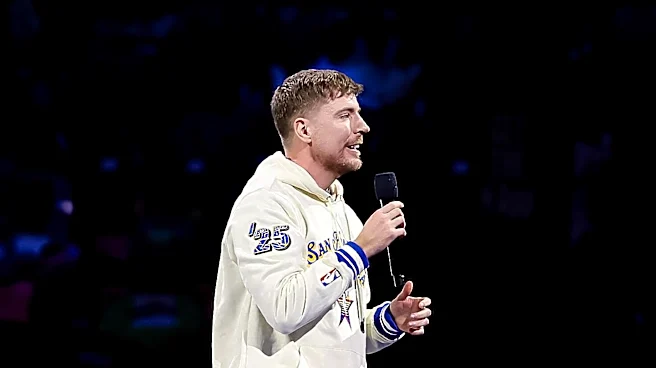
YouTube creator MrBeast, whose real name is Donaldson, has launched a $10 million project in Ghana to establish the Abna Dakwa Village. This initiative aims to provide education and support to children, diverting them from illegal child labor in the cocoa
farming industry. The newly constructed village includes a school for over 300 students, 10 homes for teachers, a medical clinic, a marketplace, a community center, a library, and recreational facilities. Additionally, the project incorporates clean water infrastructure, solar power, a farm, and fish tanks to ensure the community's sustainability beyond educational provisions. Students at the school will receive free meals for the next five years, supported by The Rockefeller Foundation, which also promotes local agricultural production through a community farm. The project was developed with assistance from the 1 Billion Followers Summit, Mohammed Bin Rashid Global Initiatives, and the Varkey Foundation, with solar infrastructure supported by the Global Energy Alliance for People and Planet. Donaldson has also partnered with the Arbour Day Foundation to plant 250 new trees, compensating for the 190 trees removed during construction.
Why It's Important?
This project is significant as it directly addresses the persistent issue of child labor in Ghana's cocoa sector, a problem often linked to poverty and limited access to basic services in rural cocoa-growing areas. By creating a comprehensive community centered around education, food, healthcare, housing, water, and energy, MrBeast's initiative offers a holistic solution to keep children in school and out of hazardous work. The provision of free meals for students for five years, supported by The Rockefeller Foundation, not only ensures children's nutritional needs are met but also supports local economic growth through agricultural production. This model could serve as a blueprint for similar interventions in other regions facing child labor challenges, demonstrating how integrated community development can create sustainable alternatives. The involvement of global partners and foundations highlights a collaborative approach to tackling complex socio-economic issues, potentially inspiring further philanthropic efforts from high-profile individuals and organizations.
What's Next?
The Abna Dakwa Village project is expected to continue its operations, with free meals for students guaranteed for the next five years through support from The Rockefeller Foundation. Donaldson's organization, Beast Philanthropy, will likely monitor the project's impact on reducing child labor and improving educational outcomes in the region. The success of this comprehensive community development model could lead to its replication in other areas facing similar challenges, both within Ghana and across other cocoa-producing nations. Donaldson has previously undertaken philanthropic efforts in Africa, including funding over 100 wells in 2023, suggesting a continued commitment to the continent. Future steps may involve further partnerships with international organizations and local governments to scale up these efforts and address the root causes of child labor more broadly. The project's long-term sustainability will depend on continued funding, community engagement, and effective management of its various components.
Beyond the Headlines
Beyond the immediate impact of providing education and resources, this project highlights the evolving role of social media influencers in global philanthropy. MrBeast's use of his massive YouTube platform to draw attention to issues like child labor in cocoa production and to fund large-scale development projects demonstrates a new paradigm for charitable giving. This approach, however, has also sparked discussions about the allocation of philanthropic resources, with some questioning why Donaldson doesn't focus more on local issues in his hometown of Greenville, North Carolina. His response, detailing the extensive work of Beast Philanthropy in the U.S., underscores the complexities of global versus local aid and the scrutiny that comes with high-profile charitable endeavors. The project also implicitly raises ethical considerations for consumers of cocoa products, linking the supply chain to social issues and encouraging greater awareness of sustainable and ethical sourcing practices.