




What's Happening?
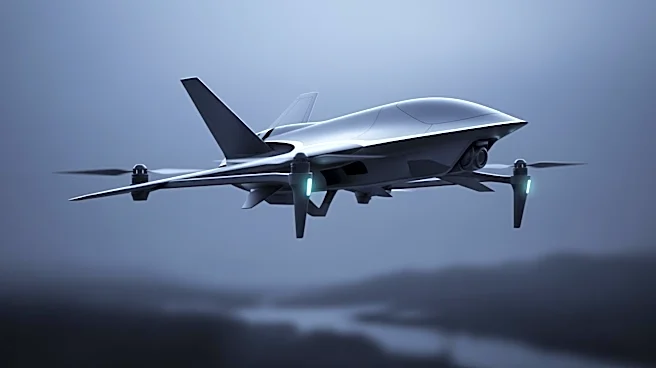
Russia has introduced the Geran-4 jet-powered drones to counteract the increasing effectiveness of Ukrainian interceptor drones. According to Serhiy Beskrestnov, a defense adviser, Ukrainian forces have improved their interception rate of Russian Shahed-type
UAVs from 10% to about 50% since winter. The Geran-4 drones, capable of speeds between 400 to 500 km/h, are designed to outpace these interceptors. The drones, first used in combat over Ukraine in May 2026, are equipped with either high-explosive or thermobaric warheads. Ukrainian forces have already downed a Geran-4 using a Wild Hornets STING interceptor drone, marking the first confirmed destruction of this class of Russian UAV. Ukraine is also developing faster interceptor variants and scaling up low-cost interceptor missiles in anticipation of future threats.
Why It's Important?
The deployment of Geran-4 drones represents a significant shift in the aerial conflict between Russia and Ukraine, highlighting the ongoing technological arms race. This development could impact the strategic calculations of both nations, as Russia seeks to maintain its aerial offensive capabilities while Ukraine enhances its defensive measures. The increased interception rates by Ukraine could undermine the cost-effectiveness of Russia's drone campaigns, potentially leading to a reevaluation of their tactics. The reliance on imported components, particularly from China, for the Geran-4 drones also underscores the global dimensions of the conflict, with potential implications for international relations and trade.
What's Next?
As the conflict continues, both Russia and Ukraine are likely to further innovate and adapt their drone technologies. Ukraine's efforts to develop faster interceptors and increase missile production suggest a proactive approach to countering the new threat posed by the Geran-4 drones. Meanwhile, Russia may continue to enhance its drone capabilities, potentially increasing production and exploring new technologies to maintain its strategic advantage. The outcome of this technological race will significantly influence the dynamics of the conflict in the coming months.