

What's Happening?
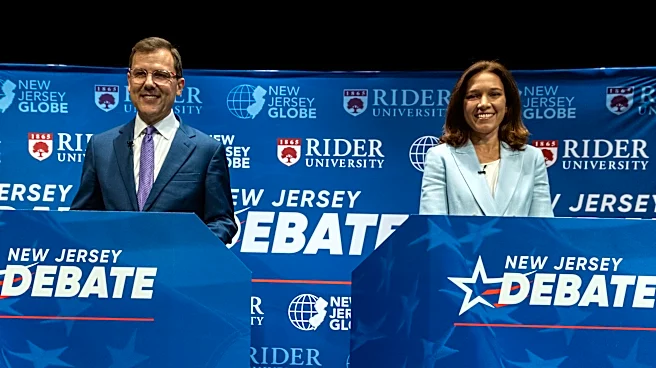
Republican U.S. Senate nominee Mike Katz has publicly called for a televised debate with Democratic U.S. Senator Chris Coons. This call comes after Katz's campaign stated it was informed that the University of Delaware would not host its traditional Delaware Debates
program for the 2026 general election. The University of Delaware has not yet publicly confirmed the cancellation of the 2026 debates, though its website, as of September 28, does not list a schedule for this year's events. Katz emphasized that Delaware voters deserve the opportunity to see both candidates on the same stage, answering questions and defending their records. He has urged Delaware Republican Party Chairman Gene Truono and Delaware Democratic Party Chair Evelyn Brady to collaborate in organizing a professionally moderated and televised debate, inviting various media organizations to participate.
Why It's Important?
The potential absence of the traditional Delaware Debates could significantly impact voter education and engagement in the upcoming U.S. Senate election. Debates provide a crucial platform for candidates to articulate their policy positions, challenge opponents, and allow voters to directly compare their visions for the state and nation. If the University of Delaware's program is indeed canceled, it removes a long-standing, non-partisan forum for political discourse. Katz's call for an alternative debate highlights the perceived importance of such events for democratic transparency and accountability. The outcome of this debate challenge could influence how voters perceive the candidates' willingness to engage in direct public scrutiny and could shape the narrative of the Senate race in Delaware.
What's Next?
The immediate next step will be to see if the University of Delaware officially confirms the status of its 2026 Delaware Debates program. Following that, the focus will shift to the responses from Senator Chris Coons and the leadership of both the Delaware Republican and Democratic parties regarding Katz's proposal for an independently organized televised debate. Media organizations may also weigh in on their willingness to host or broadcast such an event. If a debate is organized, its format, moderators, and topics will be critical. If no debate materializes, both campaigns will likely rely more heavily on individual appearances, advertising, and social media to convey their messages to voters ahead of the November 3 general election.
Beyond the Headlines
This situation touches upon broader trends in political campaigning and voter engagement. The traditional role of university-hosted debates as neutral ground for political discourse is being challenged, potentially due to various factors including funding, logistical complexities, or changing media consumption habits. The reliance on such established institutions for debates underscores the difficulty in creating universally accepted, non-partisan platforms in an increasingly polarized political landscape. Katz's appeal to party leaders to organize a debate also highlights the evolving role of political parties in facilitating public dialogue. The incident could spark a wider discussion about the future of political debates and how best to ensure informed voter participation in an era where direct candidate interaction is becoming less common.