

What's Happening?
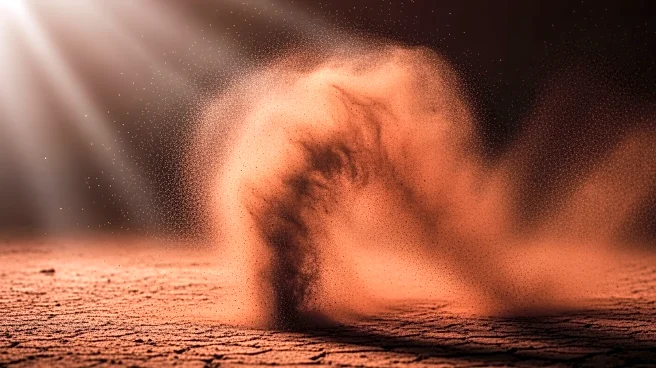
Recent observations have uncovered a new mechanism by which Mars loses water, challenging previous assumptions about the planet's climate history. A localized dust storm during Martian Year 37 (2022-2023) led to an unexpected increase in water vapor in the atmosphere,
which was followed by a rise in hydrogen levels at the exobase. This suggests that smaller, localized storms can significantly contribute to water loss, a process previously attributed mainly to large-scale atmospheric events. The study, drawing on data from multiple Mars missions, indicates that these smaller storms may play a crucial role in the planet's long-term climate evolution.
Why It's Important?
Understanding how Mars loses water is vital for comprehending the planet's climate history and its potential for past habitability. The discovery that smaller dust storms can drive significant water loss challenges existing climate models and suggests that Mars' atmospheric dynamics are more complex than previously thought. This insight could influence future Mars exploration missions and the search for signs of past life. Additionally, the findings may inform strategies for future human exploration, as understanding water dynamics is crucial for sustaining human presence on Mars.