



What's Happening?
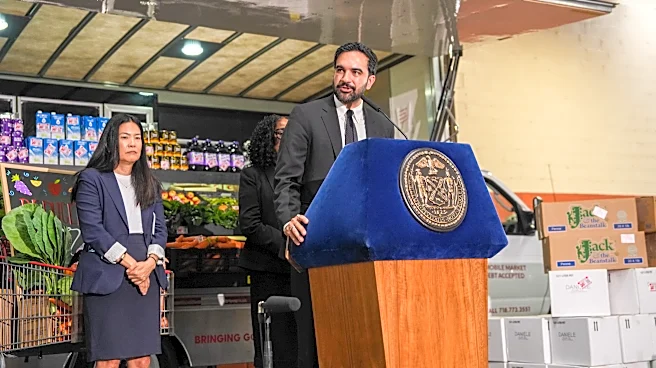
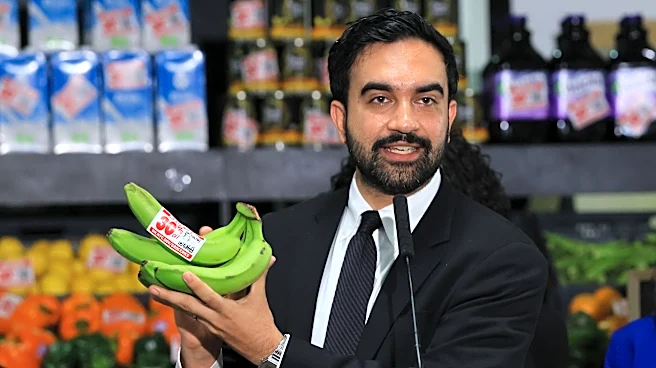
New York City Mayor Zohran Mamdani has addressed misinformation regarding the city's plan to open five city-owned grocery stores. Contrary to claims circulating online, no identification will be required to shop at these stores. The confusion arose from
a comment by Jeanny Pak, interim president and CEO of New York City's Economic Development Corporation, about a potential 'library-card-esque' system to manage supply and prevent reselling of discounted items. However, this system would be voluntary and not require ID. Mamdani, during an appearance on The Joy Reid Show, emphasized that the initiative aims to tackle rising grocery prices without imposing ID requirements. The Mayor's Office clarified that the customer card system is not an identification mechanism and will not be mandatory for store access.
Why It's Important?
The clarification from Mayor Mamdani is significant as it addresses concerns about accessibility and privacy for New Yorkers. The misinformation had been used to criticize Democratic opposition to voter ID laws, drawing parallels that do not apply. By ensuring that no ID is required, the city maintains inclusivity and accessibility, crucial for low-income and undocumented residents who might otherwise face barriers. This move also highlights the city's efforts to combat food insecurity and manage grocery prices, a pressing issue amid economic challenges. The initiative reflects broader debates on privacy, access, and the role of government in providing essential services.
What's Next?
The city will proceed with its plans to open the grocery stores, with the customer card system being designed by the selected operator through the city's procurement process. The focus will remain on ensuring the stores are accessible to all residents without ID requirements. As the initiative progresses, it will be important to monitor its impact on grocery prices and accessibility. The city may face continued scrutiny and misinformation, necessitating clear communication to the public. Additionally, the initiative could serve as a model for other cities looking to address similar issues of food insecurity and price management.