







What's Happening?
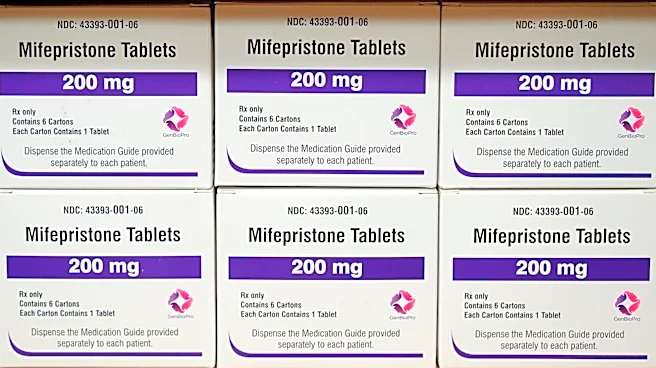
Abortion providers and advocates are bracing for potential disruptions in reproductive care following the U.S. Supreme Court's temporary decision to maintain nationwide access to mail-order mifepristone. This decision comes as several legal challenges,
including a lawsuit from Louisiana against the FDA, seek to limit access to this abortion medication. The legal landscape remains volatile, with the FDA undergoing significant leadership changes, including the recent ousting of Commissioner Marty Makary and Dr. Tracy Beth Hoeg, the acting director of the FDA’s Center for Drug Evaluation and Research. Advocates express concern over the potential for a single state to influence national medication regulations, which could have widespread implications for the pharmaceutical industry. The ongoing legal battles are seen as a constant challenge, with providers and patients facing uncertainty and potential barriers to accessing necessary care.
Why It's Important?
The ongoing legal challenges surrounding mifepristone access highlight the broader implications for reproductive rights and healthcare access in the U.S. Restrictions on abortion medications could disproportionately affect vulnerable populations, including survivors of intimate partner violence and human trafficking. The potential for increased state-level control over medication access raises concerns about the uniformity of healthcare across the country. The situation underscores the tension between state and federal regulations and the impact of judicial decisions on public health policy. The uncertainty and potential restrictions could lead to increased healthcare costs and logistical challenges for providers, ultimately affecting patients' ability to receive timely and safe care.
What's Next?
The legal challenges are expected to continue, with the Louisiana case likely to return to the Supreme Court in a future term. Providers are preparing for possible restrictions by considering alternative treatments, such as using misoprostol alone, which remains unrestricted. The ongoing legal uncertainty may prompt further advocacy efforts to protect reproductive rights at both state and federal levels. Healthcare providers are also strategizing to mitigate the impact of potential disruptions, emphasizing the importance of maintaining access to safe and effective abortion care. The situation remains fluid, with stakeholders closely monitoring legal developments and preparing for various outcomes.
Beyond the Headlines
The legal battles over mifepristone access reflect deeper societal and ethical debates about reproductive rights and the role of government in healthcare. The potential for criminal investigations, as suggested by Justice Clarence Thomas, adds a layer of complexity and fear among providers. The situation also highlights the challenges of providing healthcare in rural and underserved areas, where access to in-person care is limited. The reliance on mail-order medications has been a significant advancement in expanding access, but the legal uncertainty threatens to reverse these gains. The broader implications for healthcare policy and the pharmaceutical industry underscore the need for clear and consistent regulations that prioritize patient care and safety.