



What's Happening?
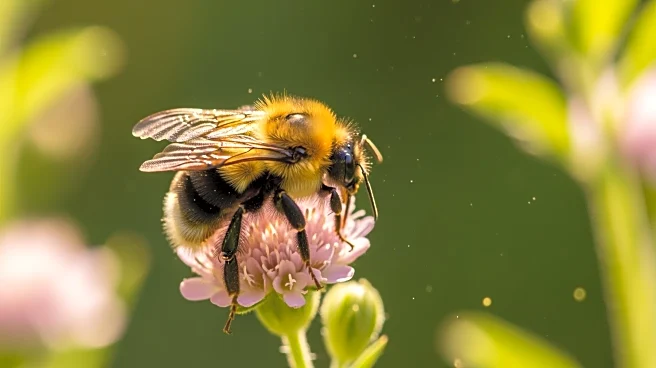
A study by Martin Luther University Halle-Wittenberg and Georg August University of Göttingen has identified red-tailed bumblebees as key hosts for the acute bee paralysis virus, which is fatal to honeybees. Previously, honeybees were thought to be the primary
hosts. The research, published in Ecology Letters, used field data from 32 locations in Germany to analyze virus spread among bee species. The findings reveal that while honeybees are main carriers of some viruses, red-tailed bumblebees significantly contribute to the spread of the acute bee paralysis virus, posing a threat to honeybee populations.
Why It's Important?
This discovery shifts the understanding of virus transmission dynamics among bee species, highlighting the role of wild bees in spreading diseases that can devastate honeybee colonies. Honeybees are crucial for pollination and agriculture, and their decline could have significant ecological and economic impacts. By identifying red-tailed bumblebees as key virus hosts, the study provides insights that could inform conservation strategies and policies aimed at protecting honeybee populations and ensuring agricultural sustainability.
What's Next?
The study suggests that increasing floral diversity and habitat space could reduce virus transmission among bees. Future research may focus on developing strategies to manage bee populations and habitats to minimize disease spread. Additionally, policymakers might consider implementing measures to enhance floral diversity in agricultural landscapes, potentially mitigating the impact of bee viruses on honeybee populations.