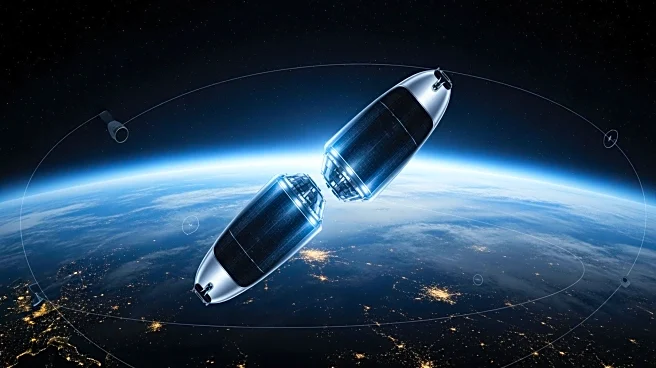

What's Happening?
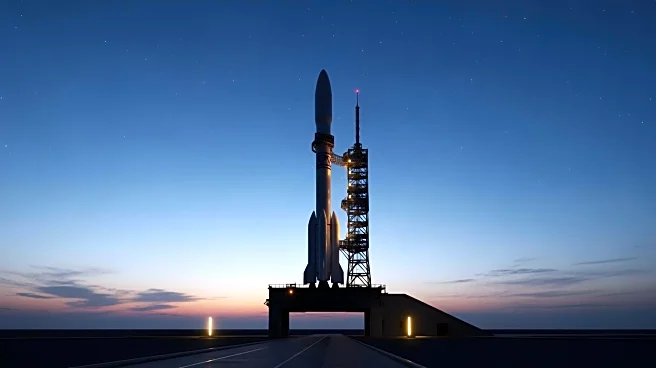
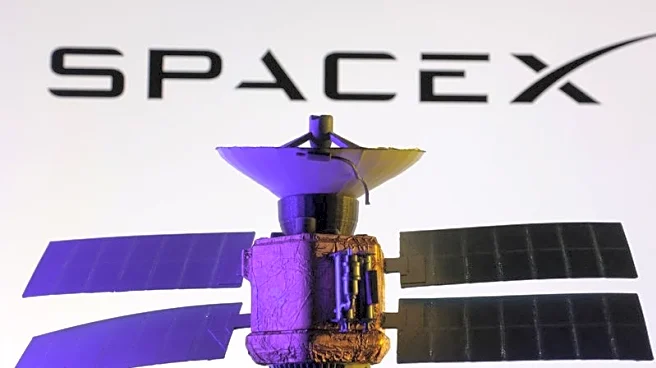
A Starlink satellite operated by SpaceX narrowly avoided a close encounter with a satellite launched by China's CAS Space. The incident occurred following a Kinetica 1 rocket launch from the Jiuquan Satellite
Launch Center, which deployed nine satellites into low Earth orbit. The closest approach between the Starlink satellite and the Chinese satellite was approximately 200 meters. SpaceX reported that no coordination or communication took place regarding the close approach. The incident highlights the increasing congestion in Earth's orbit, with the number of active satellites rising significantly in recent years.
Why It's Important?
The near miss underscores the challenges of managing satellite traffic as the number of satellites in orbit continues to grow. With thousands of satellites operating at similar altitudes, the risk of collisions increases, necessitating improved communication and coordination among satellite operators. The incident draws attention to the need for better data sharing and advance notice to prevent potential collisions. As commercial satellite constellations expand, the importance of establishing protocols for space traffic management becomes more critical.
Beyond the Headlines
The incident raises questions about the current capabilities of satellite tracking and collision avoidance systems. While SpaceX's Starlink satellites are equipped with autonomous maneuvering capabilities, many other satellites lack such technology. The event highlights the need for international cooperation in developing comprehensive space traffic management systems to ensure the safety and sustainability of space operations.