




What's Happening?
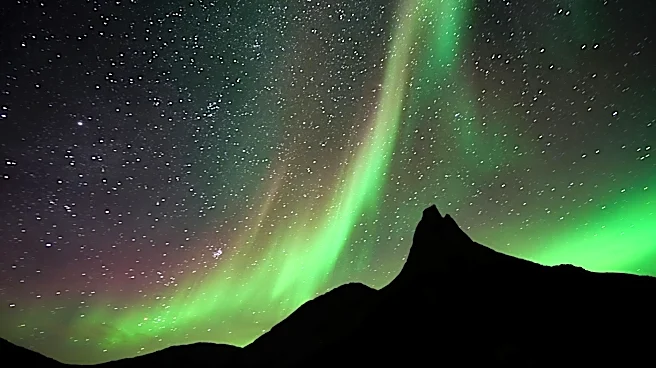
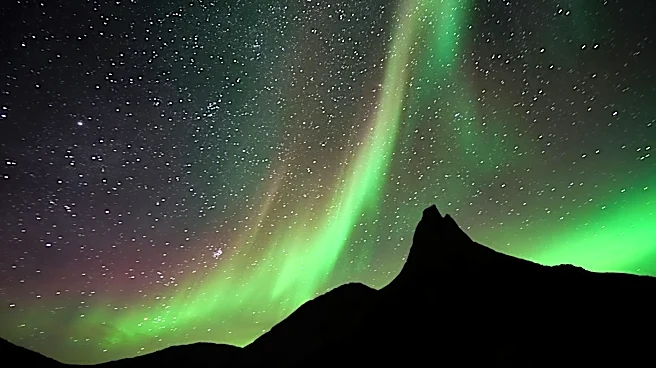
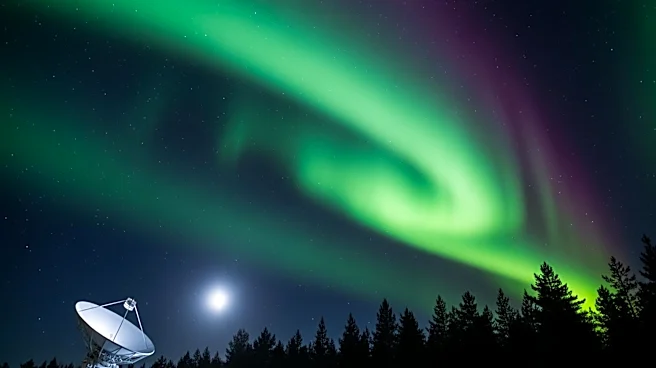
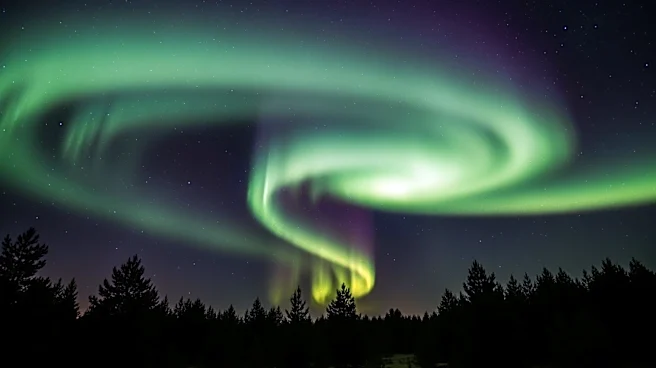
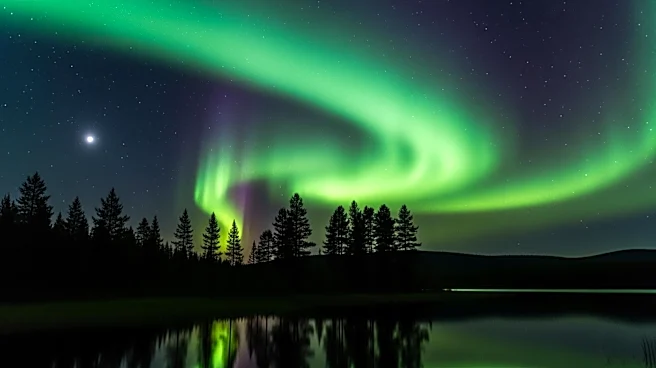
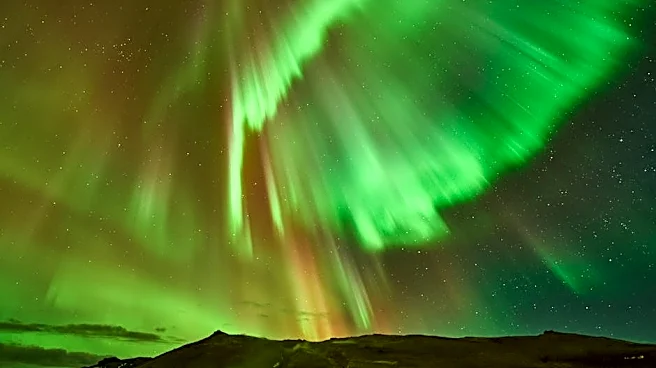
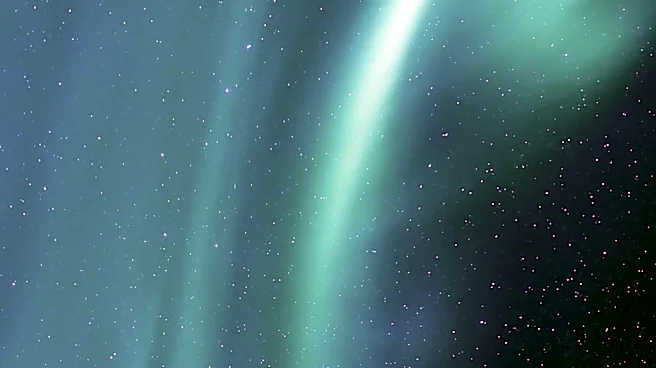
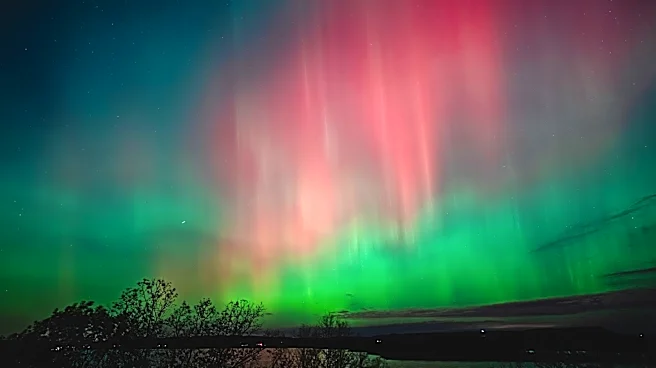
A powerful geomagnetic storm is approaching Earth, potentially allowing skywatchers across the northern U.S. to witness the northern lights. The National Oceanic and Atmospheric Administration (NOAA) has issued a G3 geomagnetic storm watch for June 4
and 5, 2026. This heightened auroral activity follows three powerful solar flares from sunspot Region 4455, which have launched coronal mass ejections (CMEs) toward Earth. These CMEs are expected to interact with Earth's magnetic field, potentially triggering geomagnetic storms and generating the aurora borealis.
Why It's Important?
The potential visibility of the northern lights in areas further south than usual is a rare event that could captivate millions of Americans. The geomagnetic storm also has broader implications, as it could affect power systems, satellite operations, and navigation systems. The interaction of charged solar particles with Earth's atmosphere can lead to voltage corrections in power grids and intermittent satellite navigation issues. This event underscores the importance of monitoring space weather and understanding its potential impacts on technology and infrastructure.
What's Next?
As the geomagnetic storm progresses, NOAA and other space weather agencies will continue to provide updates on its impact and visibility. Skywatchers are advised to find dark locations away from city lights to enhance their chances of seeing the auroras. The exact timing and intensity of the storm remain uncertain, so real-time forecasts will be essential for those hoping to witness the event. The ongoing solar activity suggests that further solar flares and geomagnetic disturbances could occur, necessitating continued vigilance.