








What's Happening?
The Euphrates River, a historically significant waterway that has supported civilizations for millennia, is experiencing a significant decline in water levels. This development has alarmed some Christian groups who interpret the situation as a fulfillment
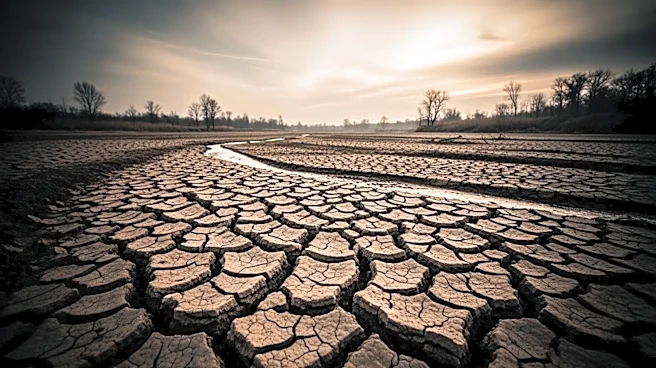
of biblical prophecy from the Book of Revelation. The river, which flows through Turkey, Syria, and Iraq, is part of the ancient Fertile Crescent, often referred to as the 'cradle of civilization.' The current crisis is attributed to environmental factors such as aggressive groundwater pumping and climate change-induced droughts. A 2013 NASA report highlighted a substantial loss of freshwater in the Tigris and Euphrates river basins, equivalent to the volume of the Dead Sea. The diminishing water levels are exacerbating humanitarian issues in the region, including crop failures, water contamination, and disease outbreaks.
Why It's Important?
The decline of the Euphrates River has significant implications for the Middle East, a region already grappling with political instability and humanitarian challenges. The river's depletion threatens the livelihoods of communities that have depended on it for agriculture and daily living for thousands of years. The environmental crisis could lead to increased migration, further straining resources and potentially escalating regional tensions. Additionally, the situation highlights the broader impacts of climate change and unsustainable water management practices, serving as a warning for other regions facing similar challenges. The religious interpretations of the river's decline add a layer of complexity, influencing public perception and potentially affecting policy decisions in the region.
What's Next?
If current trends continue, the Euphrates River could run dry by 2040, according to officials from Iraq's Ministry of Water Resources. This scenario would necessitate urgent international cooperation and intervention to address the water crisis and its humanitarian fallout. Potential solutions could involve improved water management practices, investment in sustainable agriculture, and regional agreements on water sharing. The international community may also need to provide humanitarian aid to affected populations. The religious dimension of the crisis could influence political discourse and policy-making, particularly in countries where biblical prophecy holds significant cultural sway.
Beyond the Headlines
The drying of the Euphrates River raises questions about the intersection of religion, culture, and environmental science. The situation underscores the need for a nuanced understanding of how religious beliefs can shape responses to environmental challenges. It also highlights the importance of integrating scientific research with cultural and historical contexts to develop effective solutions. The crisis may prompt a reevaluation of traditional narratives about the region's geography and history, as new theories about the location of biblical sites emerge. This could lead to broader discussions about the role of historical interpretation in contemporary environmental and geopolitical issues.