






What's Happening?
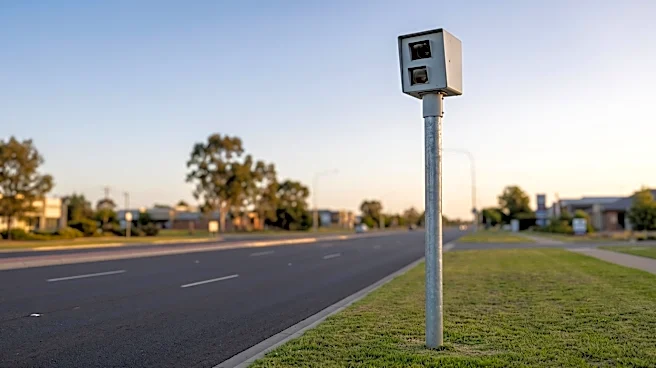
Newark, Delaware, has moved its sole speed camera to a new location on Casho Mill Road. The camera will now monitor southbound traffic between Route 273 and Barksdale Road. This relocation is part of a 15-location rotation program initiated in April.
Previously, the camera was situated near Hillside Park and then Capitol Trail. At its last location on Capitol Trail, the camera recorded an average of 1,500 violations daily, generating at least $46,500 in fines per day before expenses. The new Casho Mill Road site, according to Delaware Department of Transportation (DelDOT) statistics, sees approximately 5,917 vehicles daily. Officials have announced a 30-day grace period during which only warnings will be issued to drivers. After this period, monetary fines, starting at $31, will be enforced for speeding violations. These are civil penalties and do not result in points on a driver's license or increased insurance rates, though vehicle re-registration is contingent on fine payment. The camera's citation threshold remains constant, even if school zone speed limits are reduced.
Why It's Important?
The rotation and enforcement of Newark's speed camera program are significant for several reasons. Firstly, the substantial revenue generated from previous locations, such as Capitol Trail, highlights the financial impact these cameras have on the city's budget and potentially on its residents. The daily fines of at least $46,500 at the previous site indicate a considerable number of drivers exceeding the speed limit, suggesting a widespread issue with traffic safety in certain areas. The state law requiring excess funds from speed cameras to be directed towards highway safety initiatives means that these programs directly contribute to broader infrastructure and safety improvements across Delaware. For drivers, the civil penalty nature of the fines, without points or insurance rate increases, offers a different consequence compared to traditional traffic tickets, potentially influencing driver behavior in a distinct way. The 30-day grace period at the new location provides an opportunity for drivers to adjust to the new enforcement zone, aiming to educate rather than immediately penalize, which could affect public perception and compliance rates.
What's Next?
Following the 30-day grace period, Newark will begin issuing monetary fines to drivers caught speeding by the camera on Casho Mill Road. The Newark Police Department will continue to review and validate each violation before mailing citations, a process that typically trails actual violations by a few weeks. Payment totals will also fluctuate as recipients can pay citations online at any time. The city will monitor the effectiveness of the camera at its new location, particularly given the lower traffic volume compared to the previous Capitol Trail site. DelDOT's statistics on daily vehicle counts will likely be used to assess the camera's impact on traffic speeds and safety. The ongoing rotation program suggests that this camera will eventually be moved to another location within the 15-site rotation, continuing the city's efforts to manage traffic speed through automated enforcement. Future decisions regarding the program's expansion or modification will likely depend on the revenue generated and the observed changes in driver behavior and accident rates.
Beyond the Headlines
The implementation and rotation of speed cameras in Newark raise broader questions about the balance between public safety, revenue generation, and individual liberties. While proponents argue that speed cameras enhance road safety by deterring speeding, critics often view them as a form of revenue generation for municipalities. The significant daily fines collected at previous locations underscore this tension. The program also highlights the increasing reliance on technology for law enforcement and traffic management, shifting from direct human intervention to automated systems. This shift can lead to debates about fairness, accuracy, and the potential for algorithmic bias in enforcement. Furthermore, the requirement for excess funds to go towards highway safety initiatives suggests a policy framework aimed at reinvesting these revenues into the public good, but the transparency and effectiveness of such allocations are often subject to public scrutiny. The program's design, which avoids points on licenses, also reflects a nuanced approach to traffic enforcement, distinguishing between civil penalties and more severe infractions that impact driving records and insurance costs.