







What's Happening?
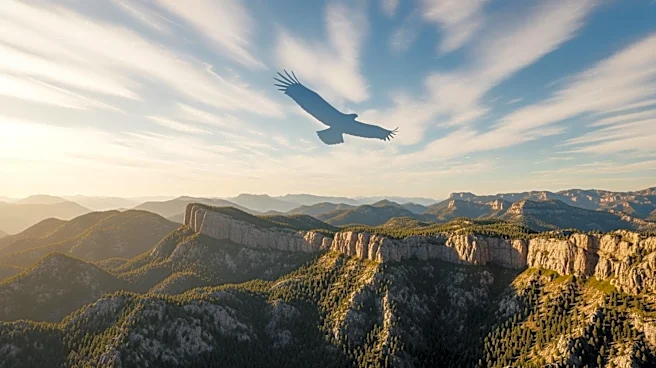
NASA is leveraging its satellite data to assist in the conservation of golden eagles by tracking their migratory patterns and identifying potential hazards. Through the Earth Action Ecological Conservation program, NASA is combining GPS tracking data with
satellite observations from sources like Landsat and the Global Precipitation Measurement mission. This data is used to create decision support tools that help wildlife managers understand the routes taken by golden eagles during migration, their winter habitats, and the risks they face. For instance, in Alaska, biologists have used this information to identify areas where eagles are at risk of electrocution from power poles, leading to mitigation efforts to retrofit these structures. This initiative is part of a broader project, Room to Roam: Y2Y Wildlife Movements, which aims to understand wildlife movement through the Yellowstone-to-Yukon corridor.
Why It's Important?
The use of NASA's satellite data in wildlife conservation highlights the intersection of technology and environmental protection. By understanding the migratory patterns and risks faced by golden eagles, conservationists can implement targeted measures to reduce mortality rates and preserve these birds. This approach not only aids in the protection of golden eagles but also sets a precedent for using advanced technology in wildlife management. The initiative demonstrates how space-based observations can provide critical insights into ecological dynamics, potentially influencing conservation strategies across North America. The project also underscores the importance of international collaboration in addressing environmental challenges, as the migratory routes of these birds cross national borders.
What's Next?
Future steps in this initiative may involve expanding the use of satellite data to other species and regions, enhancing the understanding of wildlife movements and the impacts of environmental changes. Continued collaboration between NASA, wildlife managers, and conservationists will be crucial in refining these tools and strategies. Additionally, there may be efforts to integrate more real-time data and advanced analytics to further improve the accuracy and effectiveness of conservation measures. As the project progresses, it could serve as a model for similar initiatives worldwide, promoting the use of technology in addressing ecological and environmental issues.