


What's Happening?
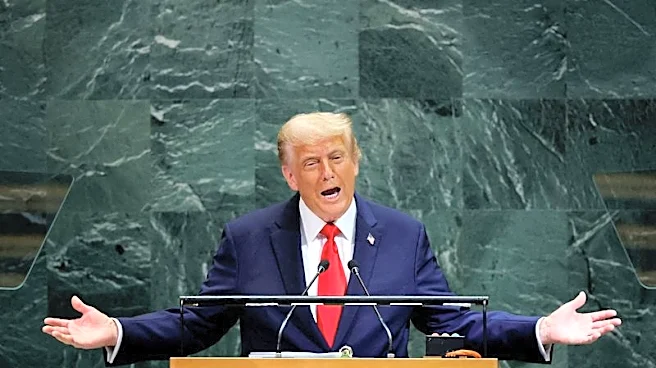
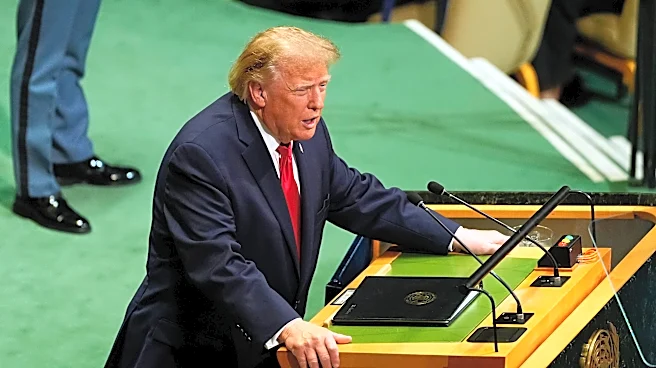
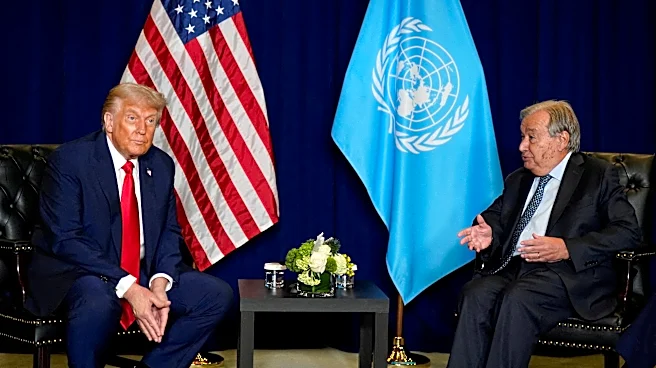
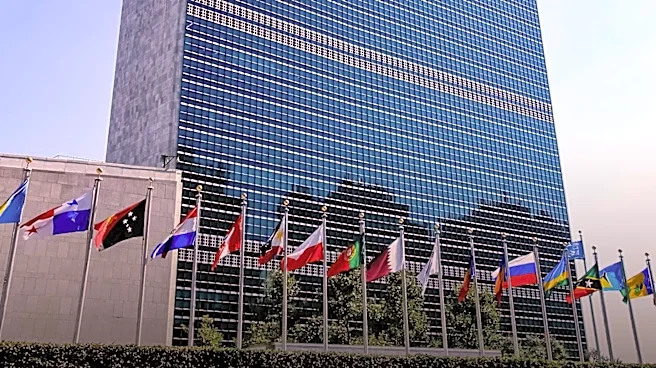
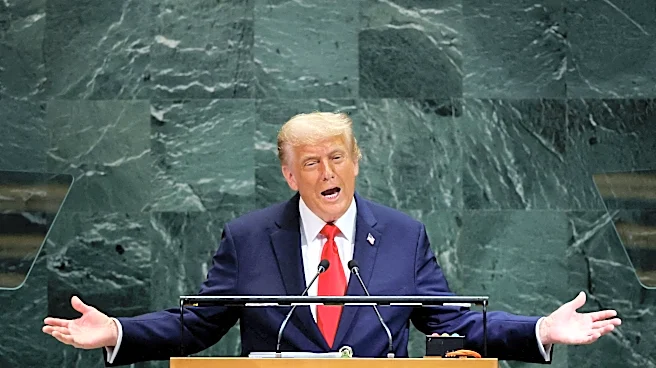
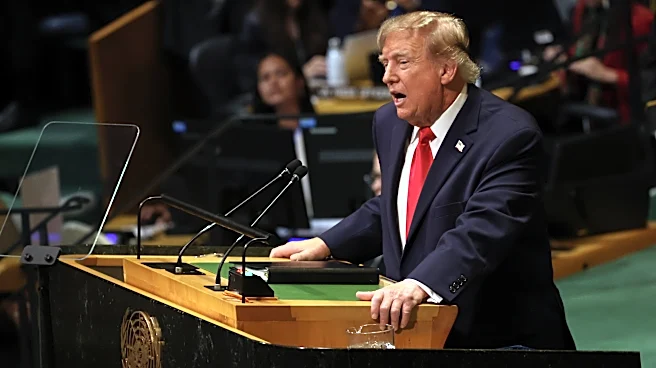
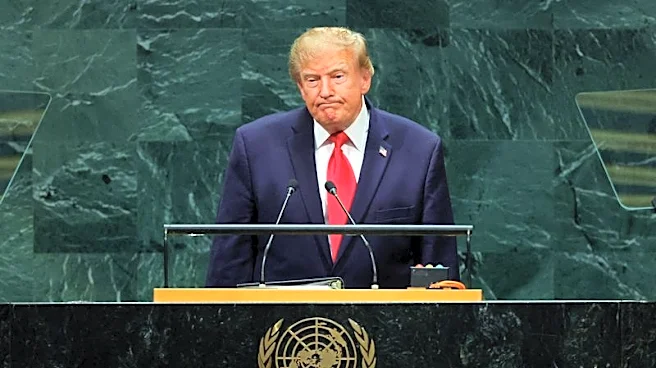
President Trump delivered a speech at the United Nations General Assembly, which observers noted was heavily influenced by the upcoming midterm Congressional elections. He highlighted what he described as accomplishments during the first two years of
his second term, including claims of a thriving economy, reduced poverty, significant tax cuts, new investments, and lower crime rates. In terms of foreign policy, President Trump defended his actions against Iran, stating his aim to prevent nuclear weapon development, but did not acknowledge his prior withdrawal from the JCPOA. He also mentioned his 'Epic Fury' campaign against Iran and expressed a desire to settle the Ukrainian-Russian war. Furthermore, he invoked the 'Don Doctrine' as a basis for U.S. actions in the Americas, citing efforts to oust Nicolás Maduro from Venezuela, combat drug cartels, work with Mexico on smuggling, and blockade Cuba. He also praised a recent deal with Greenland and Denmark and criticized globalism, citing budget cuts and layoffs at the UN.
Why It's Important?
President Trump's address at the UN General Assembly is significant as it outlines his administration's priorities and foreign policy approach on a global stage, while simultaneously appealing to a domestic audience ahead of critical midterm elections. His emphasis on 'America is back' and claims of economic success aim to bolster his political standing. The strong stance against Iran, coupled with the lack of acknowledgment of previous policy decisions, could further complicate international relations and nuclear non-proliferation efforts. The reintroduction of the 'Don Doctrine' signals a potentially more assertive and unilateral U.S. foreign policy in the Western Hemisphere, which could impact regional alliances and sovereignty. His criticism of globalism and the UN itself reflects a continued skepticism towards multilateral institutions, potentially weakening international cooperation on pressing global issues such as climate change and humanitarian crises. The speech serves as a barometer for the direction of U.S. foreign policy and its engagement with the international community.
What's Next?
Following President Trump's address, the international community will likely analyze his statements for implications on global diplomacy and security. His strong rhetoric regarding Iran could lead to heightened tensions and further discussions within the UN Security Council. The 'Don Doctrine' and its implications for Latin American countries will be closely watched, potentially leading to reactions from regional leaders and international bodies. Domestically, the speech will be scrutinized by political opponents and media outlets, particularly his claims of economic success and foreign policy achievements, as the midterm elections approach. The U.S. relationship with the UN and other multilateral organizations may continue to be strained, with potential further reductions in U.S. contributions or engagement. Future interactions between President Trump and other world leaders, such as the scheduled meeting with President Xi Jinping, will be critical in understanding the practical application of the policies outlined in his speech.
Beyond the Headlines
President Trump's speech at the UN General Assembly delves into deeper themes concerning the role of the United States in the global order and the future of multilateralism. His consistent critique of globalism and the UN challenges the foundational principles of international cooperation established post-World War II. This approach could lead to a more fragmented international system where national interests are prioritized over collective action, potentially undermining efforts to address shared global challenges. The use of the UN platform for domestic political messaging also raises questions about the evolving nature of international diplomacy and the blurring lines between domestic politics and foreign policy. Furthermore, his reinterpretation of historical doctrines, such as the Monroe Doctrine, under the 'Don Doctrine' moniker, could signify a long-term shift in U.S. geopolitical strategy, potentially leading to increased regional tensions and a re-evaluation of alliances in the Americas. The speech reflects a broader ideological struggle over the future of international governance and the balance of power.