




What's Happening?
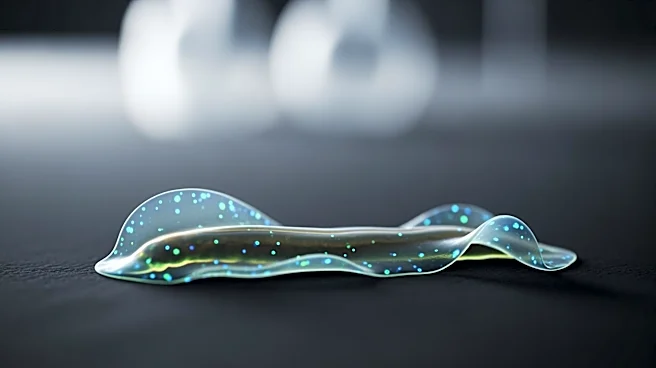
A recent study conducted by researchers at Yale University has uncovered a novel aspect of aging by examining flatworms, known for their regenerative abilities. The research, led by Andrew Verdesca and published in Current Biology, suggests that age-related
decline is not solely due to cellular damage. Instead, it highlights the role of the body's internal positioning system, which directs cellular location, as a significant factor. The study focused on planarians, a type of flatworm that can regenerate and live for extended periods. Despite their longevity, these worms exhibit a brief reproductive lifespan. The researchers discovered that the worms' infertility is not due to the deterioration of reproductive cells but rather a disorganization of their internal structure. This disorganization, termed 'positional drift,' causes reproductive organs to form incorrectly, leading to infertility. By manipulating polarity genes, which are responsible for cellular positioning, the researchers were able to influence the rate of reproductive aging in the worms.
Why It's Important?
This study provides a new perspective on the aging process, suggesting that maintaining cellular organization could be crucial in managing age-related decline. The findings could have significant implications for understanding human aging and developing interventions to prolong healthspan. The concept of 'positional drift' introduces a potential target for therapies aimed at mitigating age-related pathologies. By exploring the role of polarity genes, which are present in humans, researchers may uncover strategies to preserve cellular organization and function in aging tissues. This could lead to breakthroughs in treating age-related diseases and improving the quality of life for the aging population.
What's Next?
The research team, including Josien van Wolfswinkel, plans to further investigate the causes of positional drift and its implications for other organisms, including humans. Future studies may focus on how regeneration in planarians resets spatial information and whether similar mechanisms can be applied to human biology. The exploration of polarity genes in the context of aging could pave the way for new therapeutic approaches to maintain youthfulness and combat age-related disorders. Continued research in this area may also reveal broader biological principles applicable to regenerative medicine and aging research.