






What's Happening?
The Avon Waste Management facility is encountering significant issues due to a practice known as 'wish-cycling,' where individuals place non-recyclable items into recycling bins with the mistaken belief they will be sorted out. This phenomenon, as defined
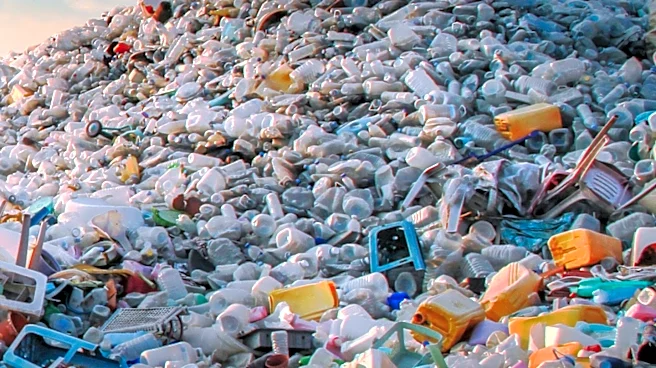
by RecycleSmartMA, involves hoping or assuming that items will be processed later, which is not the reality at materials recovery facilities (MRFs). The Avon facility, with approximately 54 employees, does not open and sort trash bags on its dangerous tipping floor. Consequently, items like toys, carriages, wheelchairs, bowling balls, hoses, Christmas lights, batteries, lawn chairs, scrap metal, bagged recyclables, clothing, floor mats, electric cords, flowerpots, bicycle rims, shoes, and Styrofoam are being incorrectly placed in recycling bins. These non-recyclable materials contaminate legitimate recyclables, damage machinery, impede the sorting process, and can lead to entire truckloads of recycling being diverted to landfills or incinerators. The responsibility for correct sorting lies with individuals, not the facility.
Why It's Important?
The prevalence of 'wish-cycling' has substantial negative impacts on the efficiency and sustainability of recycling programs across the U.S. When non-recyclable items contaminate recycling streams, it increases operational costs for waste management facilities, as they must expend resources to remove these materials. This contamination also reduces the quality and market value of genuinely recyclable materials, making them harder to sell and process into new products. Ultimately, this can lead to higher waste disposal fees for municipalities and residents, as more material is sent to landfills instead of being recycled. The damage to machinery caused by inappropriate items can result in costly repairs and downtime, further straining public services. For the environment, 'wish-cycling' undermines efforts to reduce waste and conserve resources, contributing to increased landfill volume and associated environmental burdens. It also creates a false sense of environmental responsibility without actual positive impact.
What's Next?
To combat 'wish-cycling,' initiatives like RecycleSmart MA are providing clear guidelines and search tools, such as the Recyclopedia, to help residents identify what belongs in curbside recycling bins. These tools aim to educate the public on proper disposal methods, including donating, repurposing, or dropping off specific items at designated recycling centers like Pembroke's Wilson E. Whittaker Recycling Center. Local waste management authorities are expected to continue their efforts in public education and outreach to clarify recycling rules. The success of these programs hinges on individual participation and adherence to guidelines. Future 'Trash Talk' articles are planned to address specific recycling and waste questions, indicating an ongoing commitment to public awareness. The goal is to shift the burden of correct sorting from the facilities back to the individual, ensuring the integrity and effectiveness of recycling programs.
Beyond the Headlines
The issue of 'wish-cycling' highlights a broader societal challenge regarding environmental literacy and consumer behavior. Despite widespread awareness campaigns about recycling, a significant portion of the public still misunderstands or misapplies recycling principles. This suggests a need for more intuitive and standardized recycling systems, as well as continuous, accessible education. The psychological aspect of 'wish-cycling'—the desire to do good even without full knowledge—underscores the importance of clear communication and user-friendly instructions. Furthermore, the economic implications extend to the viability of the recycling industry itself; consistent contamination can make recycling less profitable and less attractive for private companies, potentially leading to reduced services or increased costs. Addressing 'wish-cycling' is not just about waste management; it's about fostering a more informed and effective approach to environmental stewardship at the community level.