


What's Happening?
Major airline stocks across Europe and Asia experienced significant declines following military actions by the US and Israel against Iran, which led to widespread travel disruptions in the Middle East. The strikes resulted in the closure of airspace across several
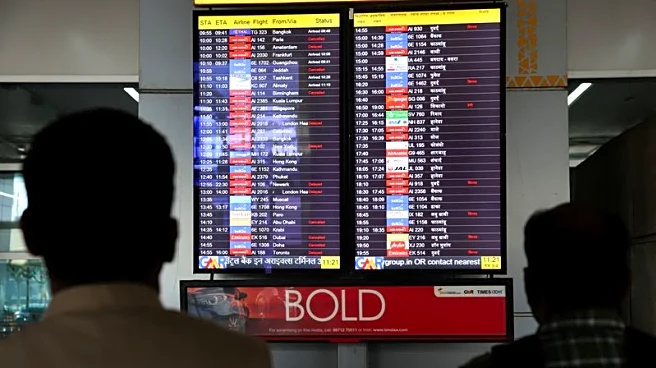
countries, including Iran, Iraq, Kuwait, Bahrain, Qatar, Israel, and the United Arab Emirates. This closure caused tens of thousands of flights to be delayed or canceled, stranding passengers globally. The impact was immediately felt in the stock market, with shares of major European airlines such as IAG, Air France-KLM, and Lufthansa dropping by 5% to 8%. Similarly, airline stocks in the Asia-Pacific region, including Qantas, Cathay Pacific, Singapore Airlines, and Japan Airlines, also saw declines of around 5%. The disruption primarily affected major hub airports in the Middle East, which are crucial for connecting flights worldwide.
Why It's Important?
The travel chaos and subsequent stock market reaction highlight the vulnerability of the global airline industry to geopolitical tensions. The closure of airspace in the Middle East, a critical region for international air travel, underscores the interconnected nature of global transportation networks. Airlines operating in this region serve as major hubs for international travel, and disruptions can have a cascading effect on global travel schedules. The financial impact on airline stocks reflects investor concerns about prolonged disruptions and potential revenue losses. This situation also raises questions about the resilience of the airline industry in the face of geopolitical conflicts and the need for contingency planning to mitigate such risks.
What's Next?
While some flights in the affected region may resume in the coming days, the full restoration of normal operations could take longer, depending on the geopolitical situation. Airlines and passengers alike will need to navigate ongoing uncertainties, including potential further closures or restrictions. The industry may also face increased scrutiny regarding its preparedness for such disruptions and the effectiveness of its crisis management strategies. Stakeholders, including governments and airline companies, may need to engage in diplomatic efforts to ensure the stability of air travel routes and minimize future disruptions.