





What's Happening?
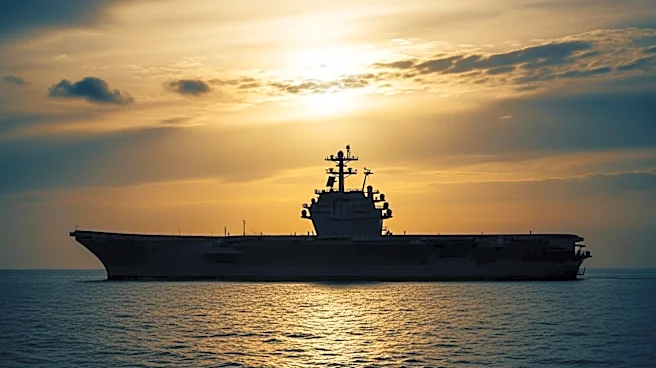
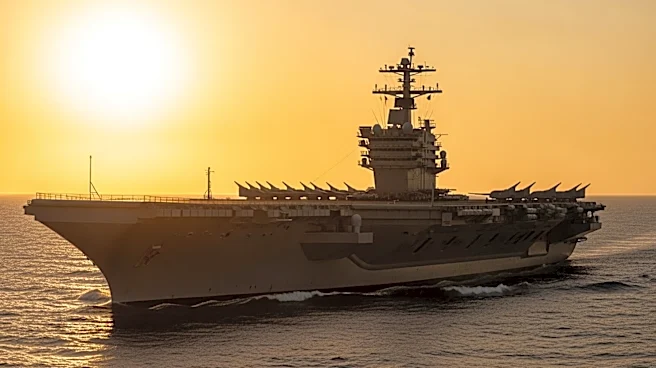
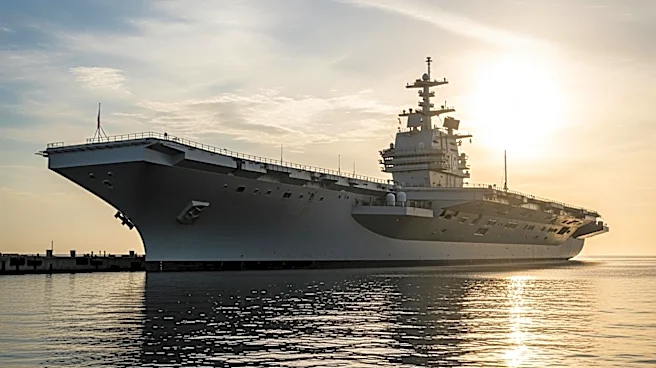
The USS Gerald R. Ford, the U.S. Navy's newest aircraft carrier, has returned to Naval Station Norfolk after completing a record deployment. The ship, which departed on June 24, 2025, was initially set for routine NATO exercises in the Mediterranean and
Northern Europe. However, it became involved in significant military operations, including actions around Venezuela and later in the Mediterranean and Red Sea against Iran. The deployment lasted 326 days, making it one of the longest in recent history. Secretary Pete Hegseth was present to welcome the crew and present a Presidential Unit Citation. The USS Gerald R. Ford will now undergo a maintenance period, addressing issues such as a fire in the laundry room and problems with its advanced aircraft launch and recovery systems.
Why It's Important?
The return of the USS Gerald R. Ford marks a significant moment for the U.S. Navy, highlighting the strategic importance of aircraft carriers in global military operations. The deployment demonstrated the carrier's capabilities in extended missions and its role in supporting U.S. military objectives in volatile regions. The operations around Venezuela and Iran underscore the U.S. Navy's readiness to project power and respond to international conflicts. The maintenance period will be crucial for ensuring the carrier's operational readiness and addressing technical issues that arose during the deployment. This event also reflects the ongoing commitment of the U.S. to maintain a strong naval presence worldwide, which is vital for national security and international stability.
What's Next?
Following its return, the USS Gerald R. Ford will enter a maintenance phase, expected to last up to a year. This period will focus on repairing damage from the fire and resolving technical issues with the aircraft launch and recovery systems. The Navy will likely assess the deployment's outcomes to improve future operations and address any logistical challenges encountered. The replacement of the USS Gerald R. Ford in the Middle East by the USS George H.W. Bush indicates a continued U.S. naval presence in the region, which may influence geopolitical dynamics and U.S. foreign policy. The Navy's ability to maintain and deploy its fleet effectively will remain a critical factor in its strategic planning.