


What's Happening?
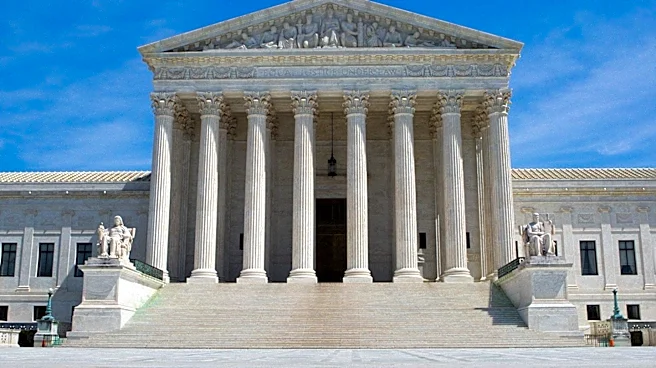
Justice Sonia Sotomayor, joined by Justice Neil Gorsuch, issued a strong statement regarding the Supreme Court's denial of certiorari in the case of *Herrera-Salazar v. United States*. The case involved Jesus Herrera-Salazar, who was convicted in 2020
for being unlawfully 'found in' the U.S. after a prior removal. After serving his sentence, he was placed on federal supervised release with the condition that he not leave the Eastern District of Oklahoma. Despite adhering to this condition, he was subsequently re-indicted and re-convicted under the same statute (8 U.S.C. § 1326(a)) for still being in the country. The Tenth Circuit Court of Appeals had previously ruled that a single unlawful reentry could lead to repeated 'found in' convictions, arguing that prosecutors did not need a new border crossing for each charge. Justice Sotomayor criticized this interpretation as a 'constitutional absurdity,' highlighting that being unlawfully present is a continuous offense and that prosecutors should not be able to circumvent the Fifth Amendment's Double Jeopardy Clause by dividing a single crime into multiple temporal or spatial units.
Why It's Important?
This statement from Justices Sotomayor and Gorsuch underscores a significant concern regarding the application of the Double Jeopardy Clause, particularly in immigration enforcement. The interpretation by the Tenth Circuit, which allows for repeated prosecutions for continuous unlawful presence, creates a 'Hobson's choice' for individuals like Herrera-Salazar: leaving the district violates supervised release, while staying leads to re-prosecution. This situation challenges fundamental constitutional protections against being prosecuted twice for the same offense. In an environment of heightened immigration enforcement and pressure to increase prosecution numbers, such statutory interpretations risk eroding due process and constitutional safeguards. The case highlights the complexities and potential pitfalls at the intersection of criminal and immigration law, often referred to as 'Crimmigration,' where missteps in legal representation can lead to severe consequences, including wrongful imprisonment or family separation.
What's Next?
While the Supreme Court denied certiorari in *Herrera-Salazar v. United States*, Justice Sotomayor's statement, joined by Justice Gorsuch, signals a clear concern from within the Court about the legal reasoning applied in such cases. This could potentially influence future appellate court decisions or lead to legislative efforts to clarify the application of 8 U.S.C. § 1326(a) in conjunction with the Double Jeopardy Clause. Defense advocates, particularly those specializing in 'Crimmigration,' will likely use this statement to challenge similar re-indictments and convictions, arguing against the 'double dipping' on continuous offenses. The issue may also prompt further legal scholarship and advocacy from civil liberties groups, pushing for a more consistent and constitutionally sound interpretation of immigration and criminal statutes to protect individuals from what Justice Sotomayor termed a 'constitutional absurdity.'
Beyond the Headlines
The deeper implications of this case extend to the ethical boundaries of prosecutorial discretion and the integrity of constitutional protections in the U.S. legal system. The scenario described by Justice Sotomayor, where an individual is re-arrested for complying with a court order, raises questions about the fairness and logic of certain legal frameworks. It highlights how aggressive prosecutorial theories, especially in politically charged areas like immigration, can stretch statutory language beyond its intended scope, potentially rendering constitutional firewalls like Double Jeopardy ineffective. This situation could lead to a re-evaluation of how continuous offenses are defined and prosecuted, ensuring that the government cannot indefinitely punish individuals for a single, ongoing status. The case also emphasizes the critical need for specialized legal counsel in 'Crimmigration' cases, as traditional legal approaches may not adequately address the unique challenges and constitutional traps present in this complex area of law.