







What's Happening?
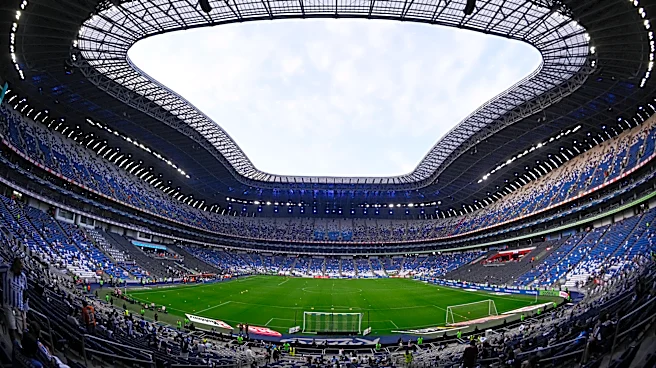
In Mexico, soccer is played in a variety of unconventional locations, reflecting the sport's deep cultural roots and community spirit. Fields are found in diverse settings such as highway underpasses, town edges, and even inside the crater of the Teoca
volcano. These spaces, often built by local communities, serve as vital social hubs where people of all ages gather to play and watch soccer. In Monterrey, a 14-year-old named Humberto Guadalupe, nicknamed 'Messi,' dreams of becoming a professional player, practicing on a field surrounded by abandoned cars. Meanwhile, in Xochimilco, players travel by traditional boats to reach natural grass pitches located within a UNESCO World Heritage Site. These pitches, while socially significant, pose ecological challenges, particularly to the habitat of the endangered axolotl salamander.
Why It's Important?
The widespread establishment of soccer fields in Mexico underscores the sport's role as a unifying force in communities, providing a sense of identity and belonging. However, the creation of these fields, especially in ecologically sensitive areas like Xochimilco, raises environmental concerns. The tension between preserving cultural traditions and protecting natural habitats highlights the complex interplay between human activities and environmental conservation. This situation reflects broader global challenges where cultural practices must be balanced with ecological sustainability. The fields also symbolize resilience and hope, offering young players like Humberto a platform to pursue their dreams despite socioeconomic hardships.
What's Next?
As Mexico continues to host soccer in diverse locations, there may be increased scrutiny on the environmental impact of these fields, particularly in protected areas. Local authorities and environmental groups might engage in discussions to find sustainable solutions that allow for the continuation of cultural practices while safeguarding natural habitats. Additionally, the stories of young players like Humberto could inspire initiatives aimed at providing better facilities and support for aspiring athletes in underprivileged areas. The ongoing dialogue between community needs and environmental preservation will likely shape future policies and practices regarding recreational spaces in Mexico.
Beyond the Headlines
The story of Mexico's soccer fields offers a deeper insight into the cultural significance of sports as a tool for community building and social cohesion. It also highlights the potential for sports to drive positive change, fostering inclusivity and providing opportunities for personal development. The environmental challenges associated with these fields serve as a reminder of the need for sustainable practices in all aspects of community life. This narrative could influence how other countries approach the integration of sports facilities within their cultural and environmental landscapes.