
What's Happening?
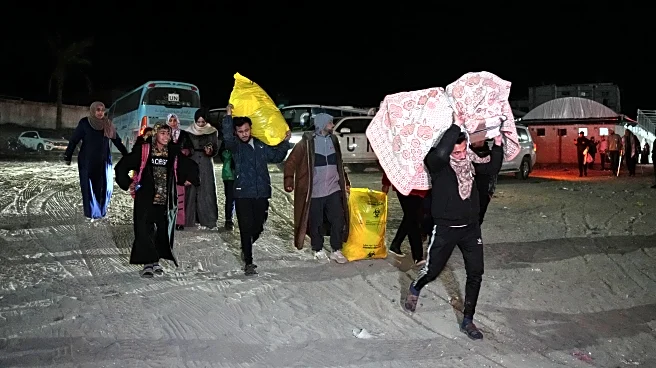
Israel has refused entry to the Palestinian technical government tasked with administering the Gaza Strip under President Trump's peace plan. According to Palestinian sources reported by Haaretz, the government was expected to enter Gaza through the Rafah
crossing to commence operations by the end of the week. In response to the blockade, committee members are meeting in Cairo, with Egypt and the U.S. mediating to facilitate their entry by the month's end. Concurrently, Israeli forces have begun demolishing the UNRWA headquarters in East Jerusalem, citing a new law that bans the organization due to alleged links to militant groups, including Hamas. UNRWA has denied these accusations, labeling the demolition a violation of international law.
Why It's Important?
The refusal to allow the Palestinian technical government into Gaza highlights ongoing tensions and the fragile nature of peace efforts in the region. This development could further strain relations between Israel and Palestine, complicating U.S.-led peace initiatives. The demolition of the UNRWA headquarters underscores Israel's hardline stance against organizations it perceives as sympathetic to Palestinian causes, potentially impacting humanitarian aid operations. These actions may provoke international criticism and affect diplomatic relations, particularly with countries involved in mediating peace efforts.
What's Next?
Efforts to mediate the entry of the Palestinian government into Gaza are ongoing, with Egypt and the U.S. playing key roles. The international community may respond to Israel's actions against UNRWA, potentially leading to diplomatic discussions or interventions. The situation could escalate if no resolution is reached, affecting regional stability and humanitarian conditions in Gaza. Observers will be watching for any shifts in U.S. policy or further actions by Israel that could influence the peace process.
Beyond the Headlines
The demolition of the UNRWA headquarters raises questions about the legal and ethical implications of Israel's actions, particularly concerning international law and the rights of humanitarian organizations. This incident may set a precedent for how similar situations are handled in the future, influencing the operational environment for international agencies in conflict zones. The broader impact on Palestinian civilians, who rely on aid from organizations like UNRWA, could be significant, exacerbating existing humanitarian challenges.