






What's Happening?
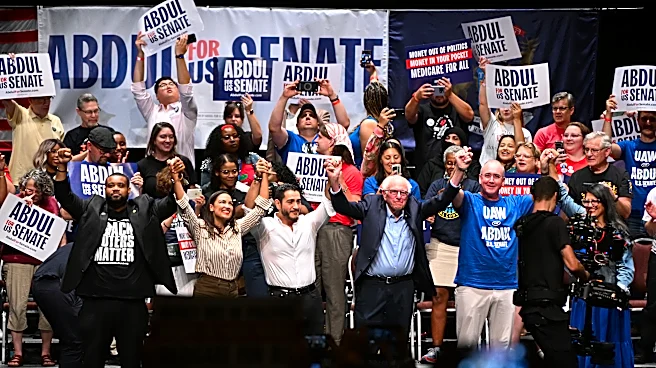
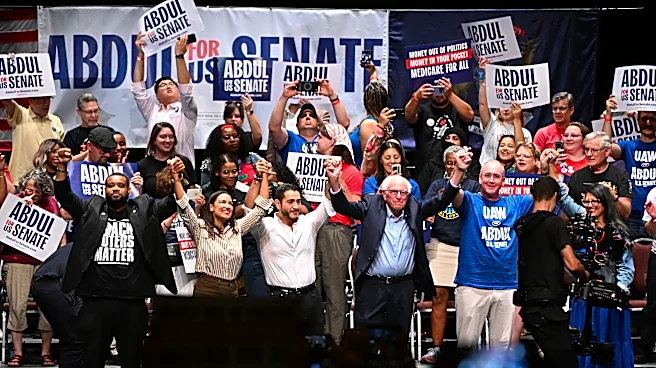
Senator Susan Collins has publicly criticized Troy Jackson, her likely Democratic challenger in the upcoming Senate race, labeling him as a 'Bernie Bro.' Collins made these remarks on Capitol Hill, emphasizing Jackson's alignment with Democratic Socialist
ideals. She noted that Jackson was a prominent supporter of Senator Bernie Sanders during his presidential campaign in Maine. Despite being questioned by a CNN reporter, Collins refrained from discussing political matters in detail, citing her role as a Senator in a federal building. However, she acknowledged Jackson's probable nomination as the Democratic candidate, underscoring their shared roots in northern Maine. A recent poll conducted by the University of New Hampshire shows Jackson leading Collins by a narrow margin, with 49% to Collins' 46%.
Why It's Important?
The comments from Senator Collins highlight the growing political tension in Maine's Senate race, which is attracting national attention. Collins' labeling of Jackson as a 'Bernie Bro' underscores the ideological divide between the candidates, potentially influencing voter perceptions and campaign strategies. Jackson's lead in the polls suggests a competitive race, which could impact the balance of power in the Senate. As Collins is a Republican incumbent, her seat is crucial for maintaining Republican influence in the Senate. The outcome of this race could have significant implications for legislative priorities and the political landscape in Maine and beyond.
What's Next?
As the Senate race progresses, both candidates are likely to intensify their campaign efforts to sway undecided voters. Collins may continue to emphasize Jackson's socialist affiliations to appeal to moderate and conservative constituents. Meanwhile, Jackson might leverage his lead in the polls to consolidate support among progressive voters. The race is expected to draw increased media coverage and financial contributions from national political groups, reflecting its potential impact on Senate control. Voter turnout and engagement will be critical factors in determining the election's outcome.