




What's Happening?
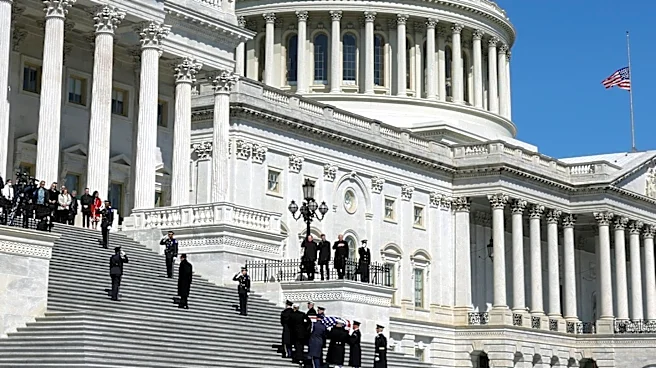
U.S. lawmakers are intensifying calls for American individuals connected to Jeffrey Epstein to face accountability comparable to that seen in the United Kingdom. Republican Congressman Thomas Massie and Democratic Representative Ro Khanna, speaking near
the U.S. Capitol alongside victims of Epstein's abuse, emphasized the need for similar consequences in the U.S. as those experienced by British figures linked to the late financier. Massie highlighted that in the UK, a royal forfeited his position and an ambassador lost his job due to Epstein connections, stating, "We need to see those same kind of consequences here." Representative Khanna, a member of the congressional investigative panel, echoed this sentiment, asserting that perpetrators of these offenses should not have buildings or academic awards named after them and that transparency is crucial. The lawmakers are spearheading a bipartisan effort to compel a congressional vote for the complete release of Justice Department files on Epstein. Suhas Subramanyam, also part of the investigative panel, indicated that the investigation will continue, stating that any attempts by Mountbatten-Windsor to avoid examination will be met with persistence.
Why It's Important?
This bipartisan push for accountability in the Epstein scandal underscores a significant demand for justice and transparency within the U.S. legal and political systems. The comparison to the UK's actions sets a precedent, suggesting that U.S. officials and institutions are being held to an international standard regarding high-profile criminal cases involving powerful individuals. The call for the release of Justice Department files is critical for public trust, as it aims to shed light on the extent of Epstein's network and any potential complicity or negligence by U.S. figures. If successful, this effort could lead to severe repercussions for those implicated, including loss of positions, public condemnation, and legal action, thereby reinforcing the principle that no one is above the law. Conversely, a failure to achieve similar accountability could erode public confidence in the U.S. justice system and perpetuate perceptions of a two-tiered system where powerful individuals evade consequences. The ongoing investigation and the pressure from Congress could also influence future legislative efforts aimed at protecting victims and preventing similar abuses.
What's Next?
The immediate next step involves the bipartisan effort to compel a congressional vote for the complete release of Justice Department files related to Jeffrey Epstein. This vote will determine the extent of transparency and disclosure regarding the scandal. The investigative panel, including Representative Suhas Subramanyam, plans to continue its probe "over the coming months and further," indicating a sustained commitment to uncovering information and holding individuals accountable. There will likely be continued pressure on individuals like Mountbatten-Windsor to appear before the investigative panel and provide testimony. The outcome of these efforts could lead to further legal proceedings, public revelations, and potentially new policies aimed at preventing similar abuses and ensuring greater accountability for those connected to such crimes. The public and victims' advocates will be closely watching these developments, expecting concrete actions and consequences for those involved.
Beyond the Headlines
The ongoing congressional pressure regarding the Epstein scandal extends beyond immediate legal consequences, touching upon deeper ethical and societal implications. The demand for transparency and accountability challenges the historical tendency for powerful individuals to evade justice, highlighting a potential shift in how such cases are handled in the U.S. The comparison to the UK's actions, where a royal lost honorary positions, suggests a growing expectation for public figures to be held to a higher moral and ethical standard, regardless of their status. This movement could foster a cultural change where institutions are more rigorously scrutinized for their associations and actions, potentially leading to a reevaluation of who is honored with public recognition, such as building names or academic awards. Furthermore, the sustained focus on victim advocacy and the pursuit of justice for those abused by Epstein could empower other victims of similar crimes to come forward, fostering a more supportive environment for reporting and prosecuting such offenses. This could ultimately contribute to a broader societal reckoning with issues of power, privilege, and sexual abuse.