








What's Happening?
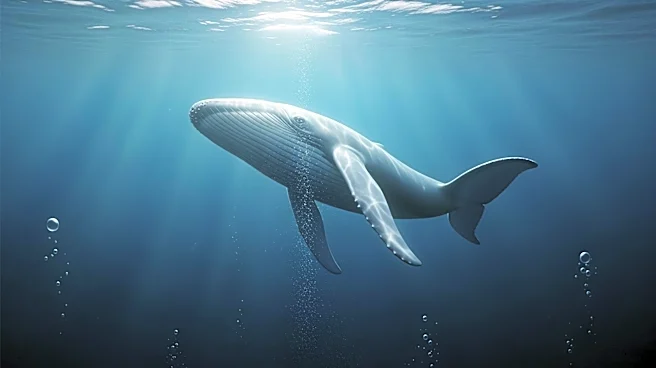
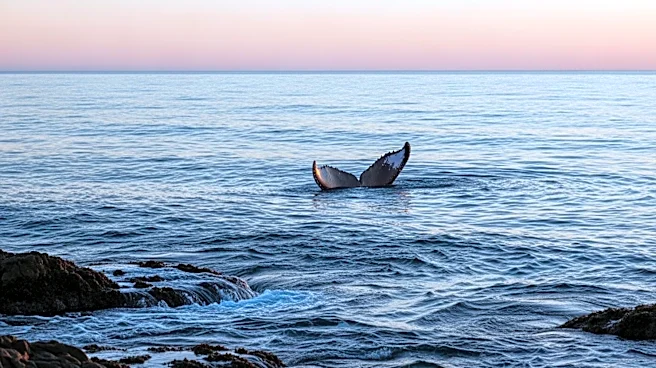
Danish authorities have confirmed the death of Timmy, a humpback whale that became a global sensation after being stranded on a German beach. The whale was found dead near the island of Anholt in the Kattegat strait, two weeks after a controversial rescue
attempt. The rescue, which cost approximately €1.5 million, involved transporting Timmy from a sandbank in Germany to deeper waters off Denmark. Despite initial signs of recovery, the whale's health deteriorated, leading to its death. The rescue effort faced criticism from the International Whaling Commission and experts who deemed it inadvisable due to the whale's compromised condition.
Why It's Important?
The death of Timmy the whale highlights the complexities and ethical considerations involved in wildlife rescue operations. The significant financial resources allocated to Timmy's rescue have sparked debate over the prioritization of individual animal rescues versus broader conservation efforts. Critics argue that funds could be better spent addressing systemic threats to marine life, such as vessel collisions and fishing gear entanglements, which affect larger populations. This incident underscores the need for careful evaluation of rescue interventions and their potential impact on wildlife conservation priorities.
What's Next?
Following Timmy's death, Danish authorities have no immediate plans to remove the whale's body or conduct a necropsy, citing no current threat to the area. The incident may prompt discussions among conservationists and policymakers about the allocation of resources in wildlife rescue efforts. It could also lead to a reevaluation of protocols for handling similar situations in the future, balancing the emotional appeal of individual rescues with the practicalities of conservation science.
Beyond the Headlines
The case of Timmy the whale raises broader questions about human intervention in natural processes and the ethical implications of such actions. The public's emotional investment in Timmy's story reflects a growing awareness and concern for wildlife, yet it also highlights the challenges of making informed decisions that align with ecological realities. This incident may serve as a catalyst for deeper discussions on the role of human agency in wildlife conservation and the importance of evidence-based approaches.