









What's Happening?
A federal judge has mandated the Pentagon to justify its policy on testosterone treatment, which is being promoted as a readiness benefit for some service members, while simultaneously being used to exclude transgender troops from the military. U.S. District
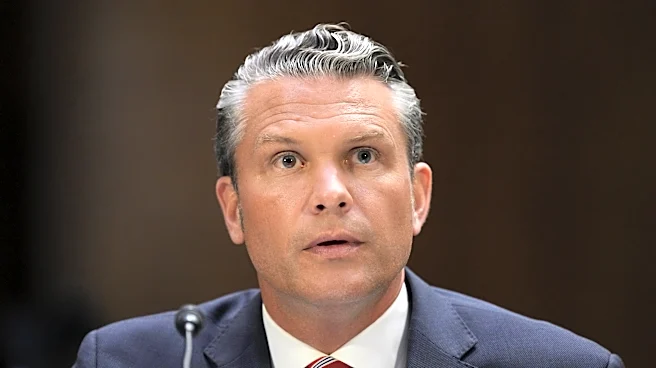
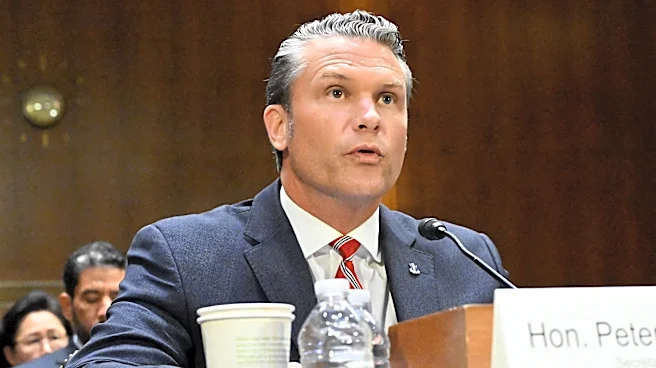
Judge Ana Reyes has ordered both parties in the case challenging President Trump's transgender military ban to address Defense Secretary Pete Hegseth's new testosterone screening and treatment program. This program, announced on July 15, involves annual screenings for testosterone deficiency for service members aged 30 and older, with voluntary testosterone replacement therapy (TRT) available. The judge's order highlights a contradiction in the administration's stance, as the same hormone treatment is used to justify the exclusion of transgender troops. The court has set an August 7 deadline for briefing on this issue, as the case progresses towards trial.
Why It's Important?
This development is significant as it underscores the ongoing legal and ethical debates surrounding the treatment of transgender individuals in the military. The case could have broad implications for military policy and the rights of transgender service members. The judge's order to scrutinize the Pentagon's testosterone policy may reveal inconsistencies in how medical treatments are applied, potentially impacting the administration's justification for the transgender military ban. The outcome of this case could influence future policies regarding medical fitness and the inclusion of transgender individuals in the armed forces, affecting thousands of current and prospective service members.
What's Next?
The parties involved in the case are expected to provide detailed information on medical guidelines for testosterone screening and treatment, as well as the costs and logistical demands associated with these treatments. The court's decision could lead to changes in military policy, particularly if the judge finds the current policies to be discriminatory. The case is moving towards a trial scheduled for January 4, with discovery and expert reports due in the coming months. Additionally, the Justice Department plans to seek U.S. Supreme Court review, which could further extend the legal battle and potentially set a precedent for similar cases in the future.