


What's Happening?
The World Food Programme (WFP) has reported that a powerful El Niño weather event could lead to nearly 49 million additional people facing acute food insecurity by the end of next year. This prediction is based on an 81% chance of a very strong El Niño,
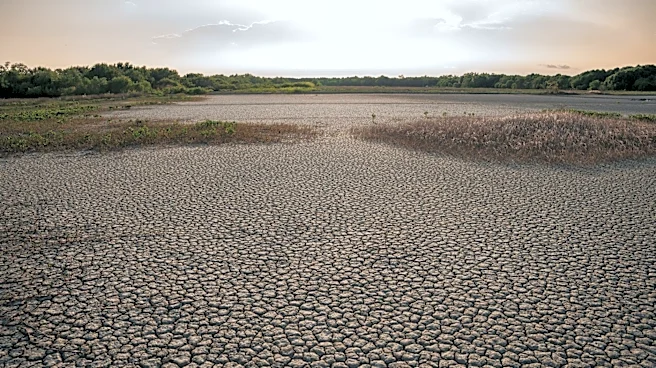
with sea surface temperatures at their highest since at least 1982. El Niño, known for altering global weather patterns, is often linked to droughts in Southern Africa, delayed monsoons in parts of Asia, and erratic rainfall elsewhere. The WFP's analysis of 45 vulnerable countries suggests that the number of people experiencing acute food insecurity could rise by 22%, affecting regions like Central America and Southern Africa the most. The report also highlights potential impacts in South America and the Caribbean, with over 12 million additional people possibly falling into acute food insecurity.
Why It's Important?
The potential increase in food insecurity due to El Niño could have significant implications for global food markets and vulnerable populations. While global food markets are currently strong, thanks to good harvests in 2025, the WFP warns that conflicts and weather-related crop losses could drive prices up, worsening food access for vulnerable households. The report underscores the need for high-frequency data collection to monitor emerging food crises, which is currently hampered by funding cuts from US and European donors. The anticipated impacts of El Niño could exacerbate existing food insecurity issues, particularly in regions already struggling with economic and environmental challenges.
What's Next?
The WFP stresses the importance of early action and preparation by governments and aid agencies to mitigate the impacts of El Niño. Current forecasts indicate potential rainfall deficits in East Africa, the Sahel, Central America, and the Caribbean, with flood risks in Somalia and neighboring areas. The agency has scaled up anticipatory action programs in 18 countries, providing cash and other assistance to over 1.3 million people to help them cope with extreme weather events. The situation calls for coordinated efforts to address the anticipated challenges and support affected populations.