







What's Happening?
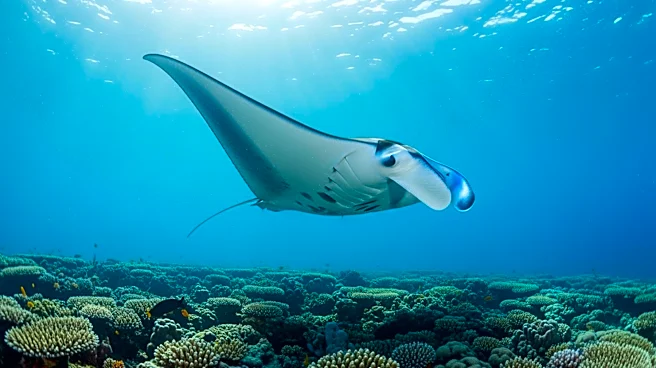
The Florida Fish and Wildlife Conservation Commission (FWC) has revised its policies on capturing giant manta rays, following public outcry over a viral video showing a captured ray in distress. The new rule allows manta rays to be taken for 'responsible
exhibition' in the U.S., but prohibits their capture for international aquariums. The decision comes after bipartisan political pressure for a complete ban on capturing the threatened species. The FWC's move aims to balance conservation efforts with educational purposes, allowing captures only with prior commission consent.
Why It's Important?
The decision reflects ongoing tensions between conservation efforts and the interests of the marine animal entertainment industry. While the new rule limits international exports, it stops short of a full ban, which some politicians and animal rights advocates argue is necessary to protect the species. The policy change highlights the challenges of regulating wildlife capture in the face of economic and educational interests. The FWC's decision could set a precedent for how other states manage similar conservation issues.
What's Next?
The new rule will take effect on July 1, and its implementation will be closely monitored by conservationists and policymakers. The FWC may face continued pressure to adopt stricter measures, especially if further incidents of distress or mortality occur. The commission's decision could influence future legislative efforts to protect threatened marine species, potentially leading to more comprehensive conservation laws. Stakeholders will likely continue to debate the balance between conservation and educational exhibition.
Beyond the Headlines
The controversy over manta ray capture raises broader ethical questions about the role of public aquariums in conservation. While aquariums can play a role in educating the public and supporting conservation, the capture and display of threatened species remain contentious. The debate underscores the need for transparent and science-based policies that prioritize the welfare of marine life. The FWC's decision may prompt other states to reevaluate their wildlife capture regulations.