



What's Happening?
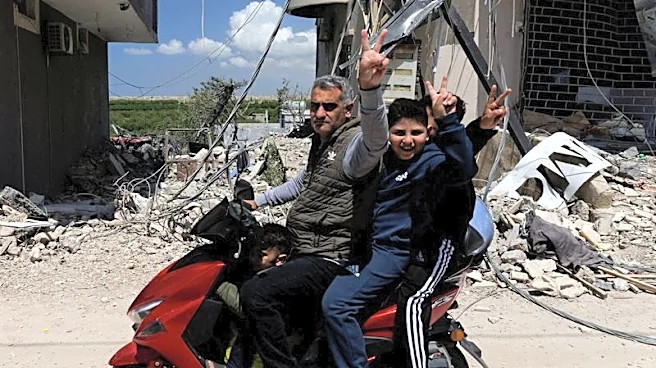
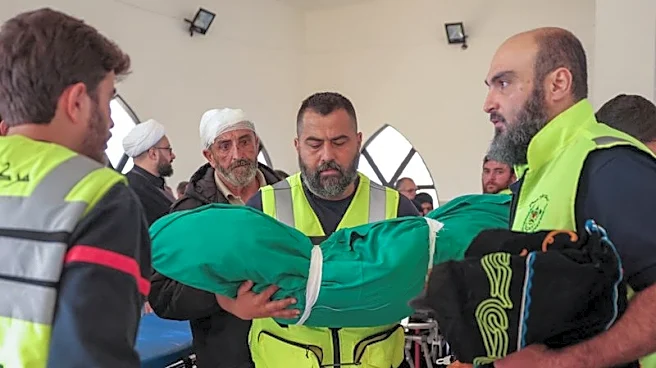
Lebanon has accused Israel of obstructing rescue efforts following an Israeli airstrike that killed journalist Amal Khalil in southern Lebanon. Khalil was covering developments near al-Tayri when an Israeli strike hit a vehicle in front of her, prompting
her to seek shelter in a nearby house, which was subsequently targeted. Lebanese authorities claim that Israeli forces fired a sound grenade and live ammunition at rescuers, preventing them from reaching Khalil. The incident is part of ongoing hostilities between Israel and Hezbollah, with Israel maintaining a buffer zone in southern Lebanon to protect against Hezbollah attacks.
Why It's Important?
The death of Amal Khalil and the alleged obstruction of rescue efforts have heightened tensions between Lebanon and Israel, drawing international attention to the conflict. The incident underscores the dangers faced by journalists in conflict zones and raises questions about the protection of press freedom and humanitarian efforts in war-torn areas. Lebanon's accusations of war crimes against Israel could lead to increased diplomatic pressure and calls for accountability. The situation also highlights the broader geopolitical dynamics in the region, with potential implications for international relations and peace efforts.
What's Next?
Representatives from Israel and Lebanon are scheduled to hold talks under U.S. auspices to address the ongoing conflict. Lebanon plans to request an extension of the ceasefire, which could provide a temporary reprieve from hostilities. However, the outcome of these talks remains uncertain, and the potential for further escalation persists. The international community may increase its involvement in mediating the conflict, and human rights organizations could push for investigations into the alleged war crimes.