

What's Happening?
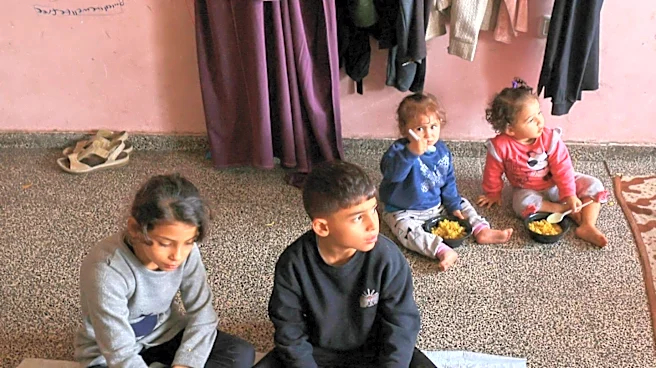
The World Food Programme (WFP) has issued a warning about the escalating hunger crisis in Afghanistan, where 14 million people are now affected by acute food insecurity. According to a press release, only one in nine Afghans currently receives food assistance.
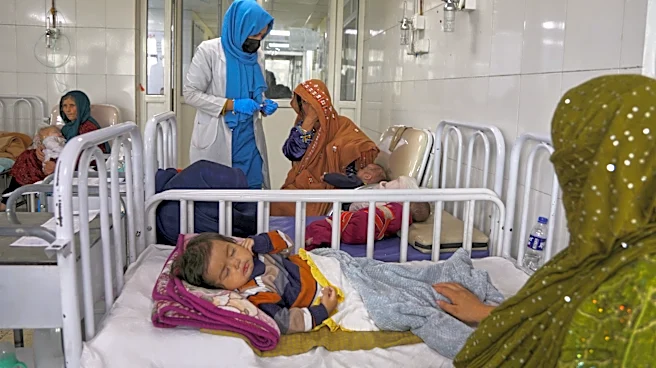
WFP Country Director for Afghanistan, John Aylieff, highlighted that child malnutrition has reached unprecedented levels across 12 provinces, with many children being fed only weak tea and bread. The agency is facing a significant resource shortfall, requiring $500 million before winter to prevent further deterioration of the situation. The crisis is exacerbated by factors such as conflict, unemployment, rising food prices, and disrupted supply routes. Additionally, the return of six million Afghans from neighboring countries has strained the fragile economy further.
Why It's Important?
The deepening hunger crisis in Afghanistan poses significant humanitarian and geopolitical challenges. The lack of adequate food assistance could lead to increased migration, radicalization, and instability, with potential repercussions beyond Afghanistan's borders. The WFP's inability to meet the growing needs due to funding cuts highlights the urgent need for international support and intervention. The crisis underscores the importance of sustained humanitarian aid and the need for a coordinated global response to address the root causes of food insecurity and support vulnerable populations.
What's Next?
The WFP is seeking $500 million in funding to continue its operations and prevent further deterioration of the hunger crisis in Afghanistan. The agency plans to focus on providing emergency food assistance and nutrition programs, particularly as winter approaches, which is a critical period for food insecurity. The international community's response and willingness to provide the necessary resources will be crucial in determining the effectiveness of these efforts. Additionally, there may be increased advocacy and diplomatic efforts to address the underlying issues contributing to the crisis, such as conflict resolution and economic stabilization.