







What's Happening?
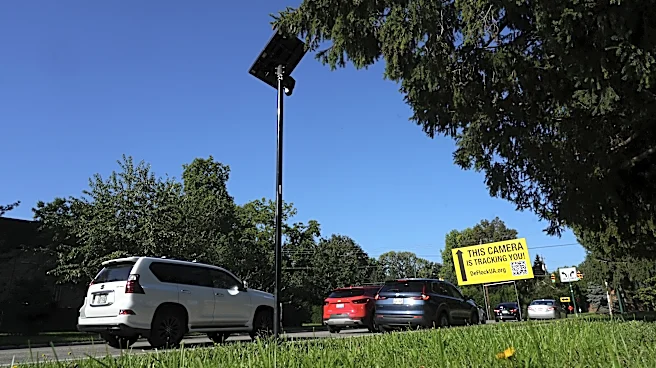
San Francisco District Attorney Brooke Jenkins and Assemblymember Matt Haney have announced their intention to introduce a legislative bill aimed at strengthening accountability for individuals who misuse authorized access to Automated License Plate Reader
(ALPR) data. The proposed legislation seeks to extend criminal accountability to those who knowingly abuse their access to ALPR systems for unauthorized purposes, mirroring existing consequences for misusing other sensitive government information systems. District Attorney Jenkins emphasized that protecting civil liberties builds trust and makes communities safer, stating that the bill will implement meaningful safeguards to hold accountable anyone who misuses camera data, while preserving ALPR as a vital tool for finding missing persons and solving serious crimes. Assemblymember Haney underscored that sharing sensitive information without a clear and lawful purpose should be a crime, asserting that public safety officers with access to such data have an enormous responsibility and a very limited purpose for its use.
Why It's Important?
This legislative initiative is crucial for addressing the growing concerns surrounding privacy and surveillance in the digital age, particularly with the proliferation of technologies like ALPR systems. While ALPRs can be effective tools for law enforcement in crime investigation and public safety, the potential for misuse of sensitive location data raises significant civil liberties issues. The proposed bill aims to strike a balance between leveraging technology for public safety and safeguarding individual privacy rights. By introducing criminal consequences for unauthorized access or use of ALPR data, the legislation seeks to deter abuse by law enforcement officers, agency employees, and other governing personnel. This move could enhance public trust in law enforcement's use of surveillance technologies, which is vital for community cooperation and effective policing. It also sets a precedent for how other jurisdictions might regulate the use of similar data-intensive technologies.
What's Next?
The legislative bill proposed by District Attorney Brooke Jenkins and Assemblymember Matt Haney will proceed through the legislative process, requiring drafting, committee reviews, and votes in the California State Assembly and Senate before potentially being signed into law. During this process, there will likely be public hearings and debates, allowing various stakeholders, including civil liberties advocates, law enforcement agencies, and privacy experts, to provide input. If enacted, the legislation would establish clear criminal penalties for the misuse of ALPR data, potentially leading to investigations and prosecutions of individuals found to be in violation. The proposal explicitly states that it does not mandate the use of ALPR technology, allowing local governments to maintain policies prohibiting or restricting its use. This means that jurisdictions will retain autonomy in deciding whether to deploy ALPR systems, even with the new accountability measures in place.
Beyond the Headlines
The introduction of this legislation delves into the complex ethical and legal dimensions of government surveillance and data privacy. It highlights the tension between the state's interest in public safety and the individual's right to privacy, a debate that is increasingly central in modern democratic societies. The bill's focus on criminal accountability for data misuse underscores a recognition that technological capabilities must be matched with robust oversight and severe penalties for abuse to prevent a 'surveillance creep.' This initiative could influence national conversations about data governance and the responsible deployment of advanced technologies by public agencies. It also raises questions about the training and ethical frameworks provided to personnel who handle sensitive data, emphasizing the need for continuous education and a strong culture of accountability within government institutions to prevent privacy breaches and maintain public confidence.