





What's Happening?
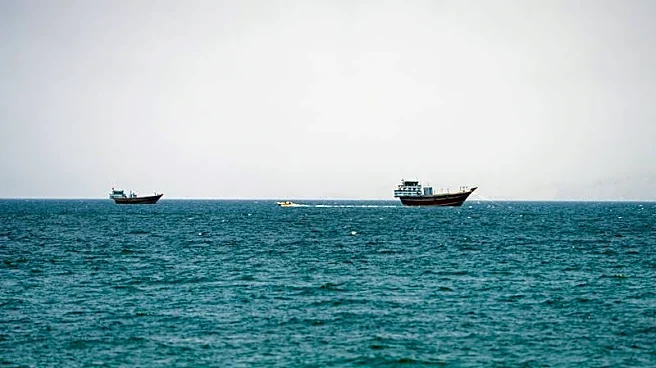
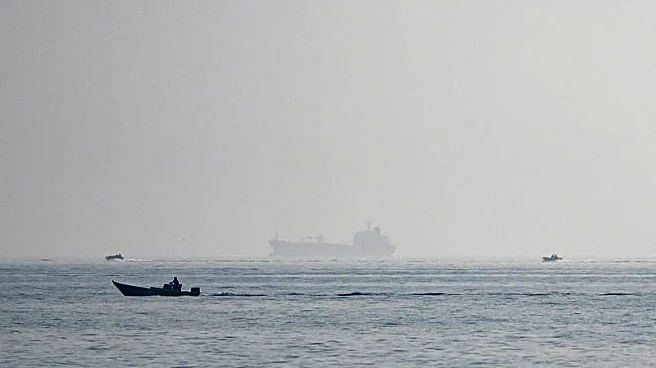
Negotiations between Iran and Oman have made progress towards a temporary solution for the Strait of Hormuz crisis. Iran proposed a plan where one direction of traffic would pass through Iranian waters, while part of the opposite route would also be in
Iranian waters. This proposal comes after Oman suggested joint regional management of the strait. Talks are focused on establishing a central shipping route through the strait, running between Omani and Iranian territorial waters. The discussions aim to address shipping issues without resolving the broader conflict. The U.S. and other stakeholders are monitoring the situation closely.
Why It's Important?
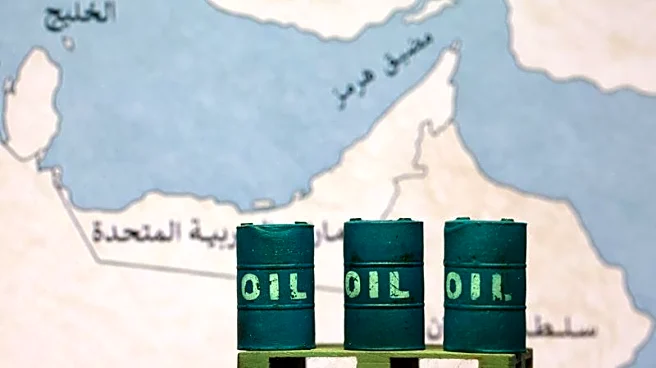
The Strait of Hormuz is a critical chokepoint for global oil shipments, and disruptions can have significant impacts on global energy markets. A temporary agreement could stabilize shipping routes and reduce tensions in the region. However, the lack of a long-term solution means that underlying geopolitical tensions remain unresolved. The situation affects global oil prices and energy security, with potential implications for international relations and economic stability. Stakeholders, including shipping companies and oil producers, are keenly interested in the outcome of these talks.
What's Next?
Further negotiations are expected as Iran and Oman work towards a more comprehensive agreement. The temporary solution may pave the way for more advanced talks, potentially involving other regional and international stakeholders. The U.S. and other countries will likely continue diplomatic efforts to ensure stability in the region. The outcome of these talks could influence future geopolitical dynamics in the Middle East, with potential impacts on global energy markets and international relations.