









What's Happening?
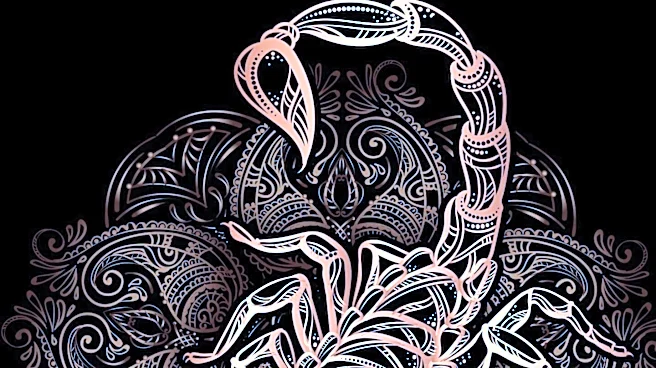
Researchers from The University of Manchester and the Natural History Museum have identified a giant scorpion species, Praearcturus gigas, which lived approximately 415 million years ago. This discovery, based on fossils that had been in museum collections
for over 150 years, reveals that Praearcturus gigas was the largest scorpion species known, measuring about a meter in length. The study, published in Palaeontology, utilized advanced imaging techniques to confirm that this creature was indeed a scorpion, challenging previous assumptions about the timeline of arthropod evolution. The findings suggest that giant arthropods existed much earlier than previously thought, during a period when life on land was just beginning to emerge.
Why It's Important?
The discovery of Praearcturus gigas significantly alters the understanding of arthropod evolution, suggesting that giant arthropods existed tens of millions of years earlier than previously believed. This challenges the notion that high atmospheric oxygen levels were the primary driver of large arthropod sizes, indicating instead that ecological factors, such as a lack of large competitors, may have played a crucial role. The findings provide new insights into the evolutionary history of arthropods and the environmental conditions that allowed such large creatures to thrive, offering a new perspective on the development of life on Earth.
What's Next?
Further research is expected to explore the ecological and environmental conditions that allowed Praearcturus gigas to reach such sizes. Scientists may investigate other fossil records to identify similar species and better understand the evolutionary pressures that led to the development of giant arthropods. Additionally, the study highlights the importance of revisiting historical fossil collections with modern technology, which could lead to more groundbreaking discoveries in paleontology.