






What's Happening?
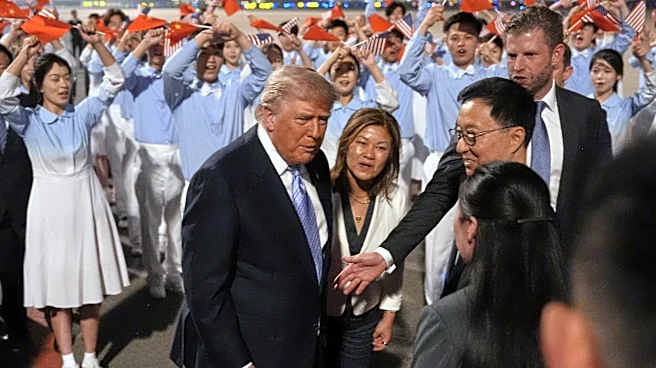
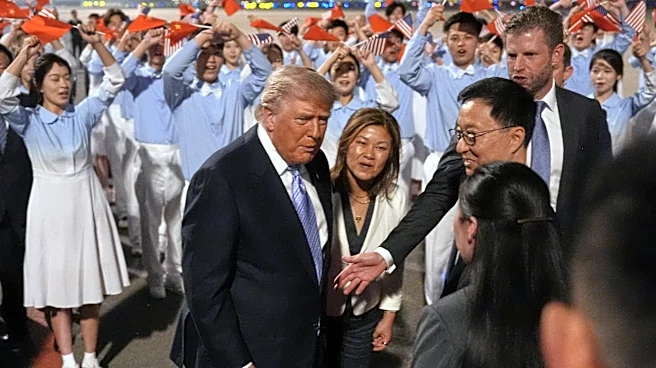
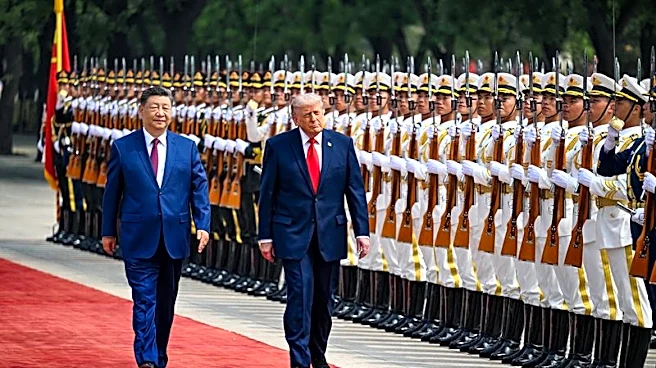
President Donald Trump's recent summit in China highlighted the challenges facing his administration amidst ongoing global tensions. The visit, which aimed to strengthen U.S.-China relations, was marked by discussions on trade and regional security issues.
Despite the diplomatic efforts, the summit revealed the difficulties Trump faces, including economic strains and the ongoing conflict with Iran. Chinese President Xi Jinping emphasized Taiwan's importance, overshadowing Trump's focus on trade. The summit concluded with limited tangible outcomes, reflecting the complex dynamics of U.S.-China relations.
Why It's Important?
The summit underscores the challenges in U.S.-China relations, particularly in the context of global economic and geopolitical tensions. The limited outcomes highlight the difficulties in achieving significant diplomatic breakthroughs amidst competing priorities. The focus on Taiwan and regional security issues reflects the broader strategic challenges facing the U.S. in its relations with China. The summit's outcomes could influence future U.S. foreign policy and economic strategies, particularly in the context of trade and regional security.
What's Next?
Following the summit, the U.S. may need to reassess its diplomatic strategies with China, particularly in light of the limited outcomes. The focus on Taiwan and regional security issues could prompt further diplomatic engagements and negotiations. The ongoing economic challenges and the conflict with Iran may also influence future U.S. foreign policy decisions. The outcomes of the summit could impact U.S.-China relations and broader geopolitical dynamics in the coming months.