







What's Happening?
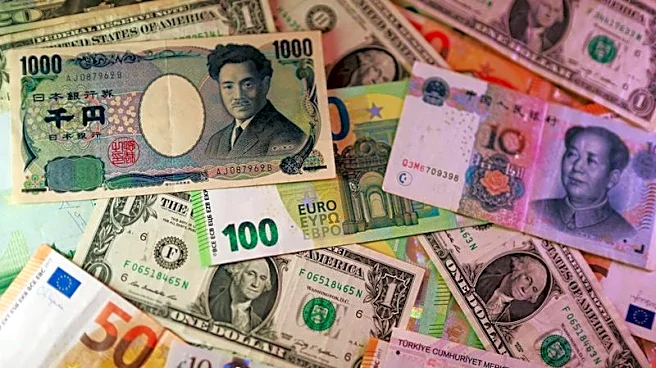
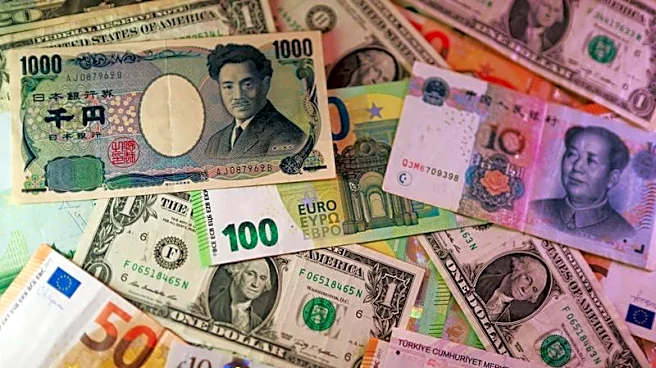
Goldman Sachs has indicated that Japan may intervene in the currency markets again if certain economic conditions are met. The yen has been under pressure, slipping towards the 160 level against the dollar, despite previous interventions. Goldman Sachs suggests
that a miss in U.S. economic data or a failure by the Bank of Japan (BOJ) to raise interest rates in September could prompt another intervention. The bank highlights that Japan has sufficient financial capacity to act, with a significant portion of its dollar reserves available for such measures. The focus is on the timing and triggers for intervention rather than the ability to act.
Why It's Important?
The potential for further intervention in the yen market underscores the challenges faced by Japan in managing its currency amid global economic uncertainties. The yen's weakness affects Japan's trade balance and economic stability, making it a critical issue for policymakers. The situation also reflects broader concerns about the impact of U.S. economic data on global markets. A weaker yen could lead to increased costs for Japanese imports and affect consumer prices. The outcome of the BOJ's policy decisions and U.S. economic data releases will be closely monitored by investors and could influence global financial markets.
What's Next?
The upcoming BOJ policy meeting in September is a key event that could determine the yen's trajectory. If the BOJ raises interest rates, it may provide support for the yen. However, if the central bank fails to meet market expectations, it could lead to further depreciation. Additionally, U.S. economic data releases will be critical in shaping market expectations and potential interventions. The situation highlights the need for careful coordination between monetary policy and currency interventions to ensure financial stability.