


What's Happening?
Baku is actively pursuing a strategy of geopolitical balancing to enhance its economic and diplomatic standing. This involves strengthening economic collaboration with Ukraine, as evidenced by the 14th session of their intergovernmental economic commission
held in Uzhhorod. During this meeting, Azerbaijan's energy minister, Parviz Shahbazov, and Ukraine’s first deputy prime minister, Denys Shmyhal, signed a protocol and adopted a 2026–27 action plan covering 14 sectors, including energy, transport, technology, and tourism. This marks the first such meeting on Ukrainian soil since the 2022 conflict. Despite ongoing hostilities, trade between Azerbaijan and Ukraine grew by 10.5% in the first eight months of 2026 compared to the previous year, with cumulative investment reaching $513.5 million. Azerbaijan has also provided over 10 aid packages for energy infrastructure to Ukraine and contributed approximately $52 million to humanitarian, rehabilitation, and reconstruction efforts. Concurrently, Baku maintains open economic and diplomatic channels with Russia, declining to join Western sanctions, and continues to supply gas to numerous European nations, with sales to the EU increasing by 65% since the invasion.
Why It's Important?
Baku's strategic approach is significant as it demonstrates a nation's ability to navigate complex geopolitical landscapes by prioritizing economic interests and maintaining diplomatic autonomy. By engaging with both Ukraine and Russia, Azerbaijan aims to safeguard its national interests and preserve its strategic independence amidst competing pressures. The economic cooperation with Ukraine, particularly in energy and reconstruction, positions Azerbaijan as a key partner in post-conflict recovery, potentially opening new markets for its expertise and resources. Simultaneously, its continued energy supply to Europe underscores its role as a reliable energy provider, enhancing its leverage in international relations. This balancing act allows Azerbaijan to diversify its partnerships and reduce dependence on any single external power, fostering a more resilient economy and a stronger diplomatic presence on the global stage. The increase in gas sales to the EU highlights Europe's continued reliance on Azerbaijani energy, further solidifying Baku's strategic importance.
What's Next?
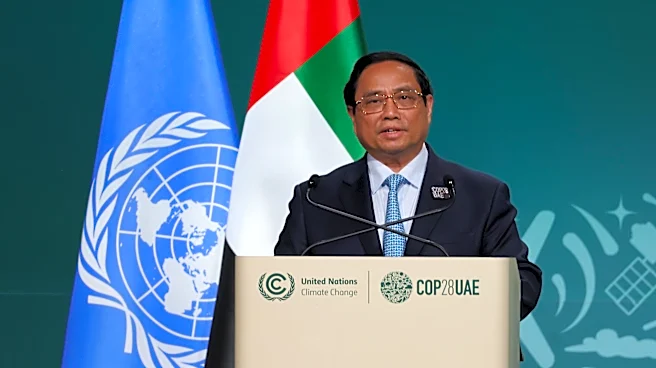
Looking ahead, Azerbaijan is expected to continue its dual-track foreign policy, balancing relations with various global powers while pursuing its economic objectives. The 2026–27 action plan with Ukraine will likely see further implementation in the agreed-upon sectors, potentially leading to increased trade and investment. Azerbaijan's commitment to non-oil and green energy initiatives, as expressed during COP29, suggests a future focus on projects like the Caspian-Black Sea-Europe Green Energy Corridor, with a final investment decision targeted for 2029 and phased commissioning from 2032. This initiative could further integrate Azerbaijan into European energy markets. Domestically, Baku may continue to promote its Alat Free Economic Zone for joint manufacturing ventures, aiming to diversify its industry beyond oil and gas. The ongoing diplomatic engagement with both Kyiv and Moscow indicates a sustained effort to maintain stability and economic ties across the region, adapting to evolving geopolitical realities.
Beyond the Headlines
Baku's geopolitical balancing act reflects a broader trend among smaller nations seeking to assert their sovereignty and economic interests in a multipolar world. This strategy challenges traditional notions of alignment and bloc politics, demonstrating that states can pursue independent foreign policies by engaging with diverse partners. The emphasis on economic collaboration, even amidst conflict, highlights the pragmatic approach of prioritizing mutual benefit over ideological divisions. This could set a precedent for other nations facing similar geopolitical pressures, encouraging a more transactional and interest-driven international relations framework. Furthermore, Azerbaijan's role in Ukraine's reconstruction efforts, while maintaining ties with Russia, underscores the complex ethical considerations involved in international aid and diplomacy during wartime. The long-term success of Baku's strategy could influence regional power dynamics and reshape perceptions of neutrality and non-alignment in an increasingly interconnected and volatile global environment.