






What's Happening?
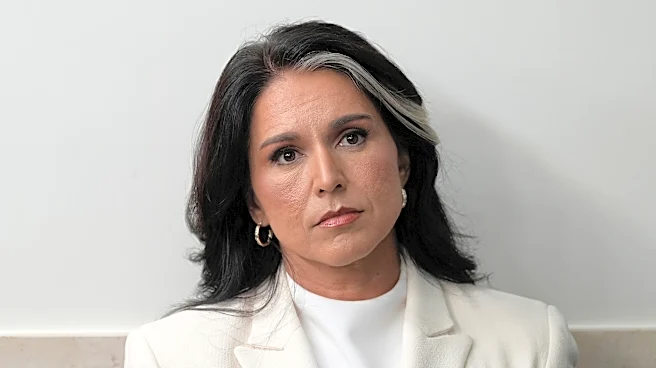
Tulsi Gabbard, the top-ranking U.S. intelligence official, has announced her resignation from her role as Director of National Intelligence. This decision comes following her husband's cancer diagnosis, prompting her to step away from public service to support
him. Gabbard, a former Democratic congresswoman who endorsed President Trump for the 2024 election, has faced challenges within the administration, including clashes with other officials and a lack of inclusion in key decision-making processes. Despite these challenges, President Trump praised her contributions, expressing confidence in her husband's recovery. Gabbard's resignation marks the fourth departure of a female Cabinet member from the Trump administration.
Why It's Important?
Gabbard's resignation highlights the ongoing turnover within President Trump's administration, particularly among high-ranking female officials. Her departure could impact the administration's intelligence operations and its approach to foreign policy, especially given her previous opposition to military interventions. This change may also influence the dynamics within the intelligence community, as a new leader will need to be appointed to navigate the complex geopolitical landscape. Additionally, Gabbard's resignation underscores the personal sacrifices public officials often make, balancing professional responsibilities with personal challenges.
What's Next?
With Gabbard's resignation effective June 30, the administration will need to appoint a successor to lead the intelligence community. This transition period may affect ongoing intelligence operations and policy decisions. The new appointee will face the task of aligning with the administration's priorities while managing internal and external challenges. Observers will be watching to see how this change affects the administration's stance on key issues, such as military interventions and intelligence sharing with allies.