
What's Happening?
In West Bengal's Uttar Dinajpur, women farmers have successfully developed a ₹400 crore bay leaf industry, transforming it into a low-investment, high-return agricultural venture. This initiative began
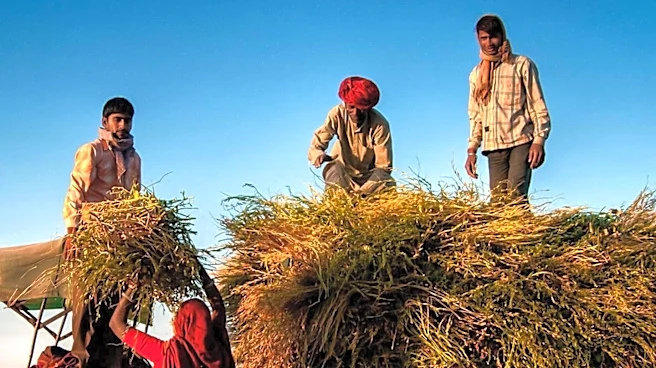
on a small scale and has now expanded significantly, providing sustainable livelihoods for thousands of farming families. The farming model requires minimal water and offers income for up to 25 years after plantation. Women play a crucial role in the harvesting, drying, and processing of bay leaves, showcasing a powerful example of rural women empowerment.
Why It's Important?
This development is significant as it highlights the potential of low-investment agricultural models to generate substantial economic benefits and empower marginalized communities, particularly women. By creating a sustainable and profitable business, these women farmers are not only improving their own economic status but also contributing to the local economy. The success of this model could inspire similar initiatives across India, promoting rural development and reducing poverty. It also underscores the importance of supporting women in agriculture, which can lead to broader societal benefits.
What's Next?
The success of the bay leaf business in West Bengal may encourage other regions to adopt similar agricultural practices, potentially leading to a broader transformation in rural economies. Stakeholders, including government agencies and non-governmental organizations, might focus on providing support and resources to replicate this model in other areas. Additionally, there could be increased interest from investors looking to support sustainable agricultural ventures that empower women and promote economic growth.
Beyond the Headlines
The bay leaf farming initiative also raises important questions about the role of women in agriculture and the need for policies that support their participation and leadership. As women continue to demonstrate their capabilities in transforming agricultural practices, there may be a push for more inclusive policies that recognize and support their contributions. This could lead to a shift in cultural perceptions about gender roles in farming and encourage more women to take on leadership roles in the agricultural sector.