





What's Happening?
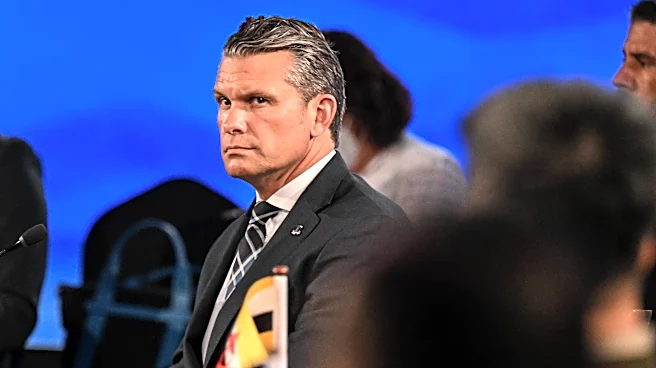
Secretary of War Pete Hegseth has announced the establishment of a new program by the Department of War designed to allow qualified active-duty service members to pursue graduate theological education without leaving military service. This initiative,
known as the Chaplain In-Service Procurement Program, aims to create a direct pathway from military service to the chaplaincy. Under this program, participants can retain their military pay and benefits while undergoing training, and their respective military departments can cover educational costs. Hegseth emphasized the importance of chaplains as the 'moral backbone' of the military, highlighting this as an early achievement of the Office of Religious Affairs, which he established in September. The program addresses a significant recruitment barrier by integrating theological education with military service requirements.
Why It's Important?
This program is significant for the U.S. military as it directly addresses the critical need for chaplains across various faith traditions, ensuring the spiritual well-being of service members. By removing the financial and logistical hurdles of pursuing graduate theological education independently, the Department of War aims to attract a more diverse and qualified pool of candidates into the chaplaincy. This initiative could enhance morale and resilience within the armed forces by providing accessible spiritual support. Furthermore, it reflects a broader Pentagon effort to emphasize the religious duties of military chaplains, following previous directives to streamline religious affiliation codes and replace uniform rank insignia with religious insignia. The program's success will depend on its implementation, funding, and the number of service members who qualify and choose to participate.
What's Next?
The Chaplain In-Service Procurement Program will begin accepting applications, with specific eligibility requirements outlined by federal law (10 U.S.C. § 2004c). These include criteria for active service duration, rank, and U.S. citizenship. Military departments will competitively select candidates based on service needs, with a cap of 25 department-funded participants per military department per fiscal year. The program requires a subsequent active-duty service commitment, typically two years for each year of training, up to six years. Annual reports detailing enrollment, religious affiliation, costs, and completion rates are mandated starting March 31, 2027. The Army is expected to release further information, while the Navy already lists a similar pathway. The practical reach of this initiative will be shaped by military regulations, selection decisions, funding availability, and the number of eligible service members.
Beyond the Headlines
This program has deeper implications for religious liberty within the U.S. military and the broader relationship between faith and service. By formalizing a pathway for theological education, the Department of War is actively supporting the religious needs of its personnel, which could foster a more inclusive environment for service members of various faiths. However, it also raises questions about the balance between religious accommodation and the secular nature of military institutions. The initiative follows a period of debate on religious liberty within the Pentagon, including discussions on religious accommodations and access to chaplains. While the program aims to streamline chaplain recruitment, its long-term impact on the diversity of religious representation within the chaplain corps and its influence on military culture will be closely watched. It represents a significant step in integrating spiritual support more formally into military career paths.