





What's Happening?
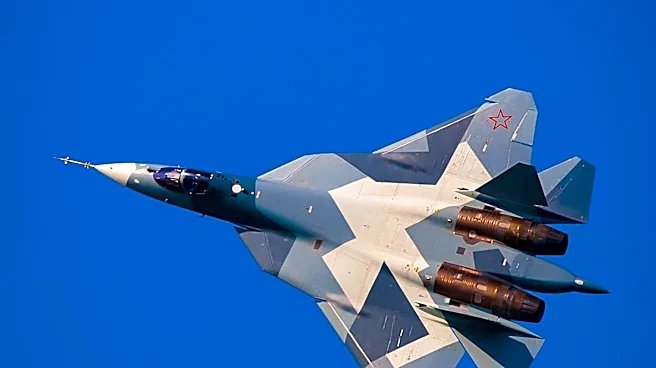
Several Russian military aircraft briefly entered South Korea's air defense identification zone (KADIZ) early Tuesday, according to Seoul's Joint Chiefs of Staff (JCS). The South Korean military detected the Russian aircraft before their entry into the KADIZ and
promptly deployed fighter jets in response to prepare for any potential contingencies. The Russian aircraft subsequently exited the zone without violating South Korea's territorial airspace. The KADIZ is not considered territorial airspace but is a designated area where foreign planes are expected to identify themselves to prevent accidental clashes. This incident marks a notable military maneuver in the region, prompting a rapid defensive reaction from South Korea.
Why It's Important?
This incident underscores the ongoing geopolitical tensions and the importance of air defense protocols in maintaining regional stability. While the KADIZ is not sovereign airspace, its violation by military aircraft without prior notification can be perceived as a provocative act, potentially leading to miscalculations or unintended confrontations. The swift deployment of South Korean fighter jets demonstrates the nation's readiness to defend its air identification zone and signals its commitment to national security. Such events can strain diplomatic relations between the involved countries and highlight the need for clear communication channels to de-escalate potential conflicts. For the U.S. and its allies in the region, these occurrences emphasize the strategic importance of robust air defense capabilities and intelligence sharing.
What's Next?
Following the incident, South Korea is likely to formally protest Russia's unannounced entry into its KADIZ, seeking clarification and assurances to prevent future occurrences. Diplomatic channels will likely be engaged to address the matter, emphasizing the importance of international air safety protocols. The South Korean military will continue to monitor its air defense identification zone closely, maintaining a high state of readiness. This event may also prompt discussions among regional allies, including the United States, regarding air defense coordination and intelligence sharing to enhance collective security in the face of such incursions. The long-term implications will depend on Russia's response and any subsequent actions.
Beyond the Headlines
The repeated entry of foreign military aircraft into air defense identification zones, even without violating sovereign airspace, can contribute to a gradual erosion of trust and an increase in regional militarization. These actions serve as a demonstration of military presence and capability, often testing the response times and readiness of neighboring nations. Beyond the immediate security concerns, such incidents can have broader implications for international law and the interpretation of air defense zones. They highlight the delicate balance between national security interests and the principles of freedom of navigation and overflight, potentially leading to calls for clearer international guidelines or agreements on military activities in these sensitive areas.