





What's Happening?
A global coalition advocating for a Fossil Fuel Non-Proliferation Treaty is gaining traction, with the Pacific Council of Churches and the Australian Religious Response to Climate Change (ARRCC) actively promoting its adoption in Australia. This initiative
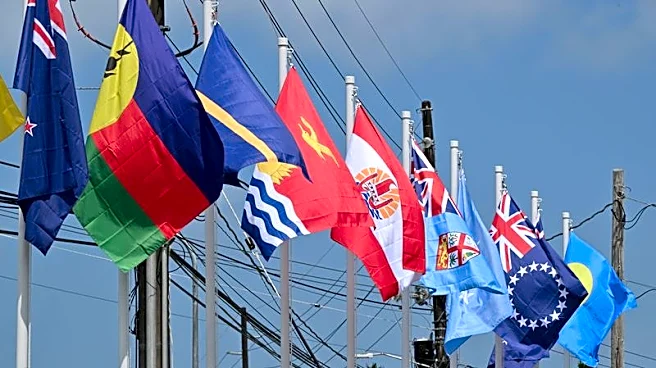
seeks a worldwide, equitable transition away from coal, oil, and gas. The push comes as Australia, the third-largest exporter of fossil fuels globally, continues to approve new coal mines and expansions, with 12 new projects already approved and 31 more awaiting federal government endorsement. These approved projects alone are projected to generate 1,725 million tonnes of lifetime emissions. Vanuatu’s Climate Minister, Ralph Regenvanu, has directly urged Australia to cease expanding its fossil fuel extraction and exports, highlighting the critical need to protect vulnerable communities from the escalating impacts of climate change. The ARRCC is specifically calling on churches and faith communities to sign a 'global faith letter' in support of the treaty, emphasizing the moral and ethical dimensions of climate action.
Why It's Important?
This movement is significant as it represents a growing international and interfaith effort to address climate change at its source: fossil fuel production. Australia's role as a major fossil fuel exporter means that any shift in its policy could have substantial global implications for emissions reductions. The call for a 'just transition' underscores the importance of supporting communities currently reliant on the fossil fuel industry, ensuring that the economic and social impacts of phasing out these industries are managed equitably. The involvement of faith-based organizations adds a moral imperative to the climate debate, potentially mobilizing a broader segment of society to advocate for policy changes. For the U.S., this international pressure on major fossil fuel producers like Australia could set a precedent or influence its own energy policies and international climate commitments, particularly as global efforts to limit warming to 1.5 degrees Celsius face increasing challenges.
What's Next?
The immediate next step involves continued advocacy by the Pacific Council of Churches and ARRCC to gather support for the Fossil Fuel Non-Proliferation Treaty within Australia's faith communities and broader civil society. This includes encouraging churches and individuals to sign the 'global faith letter.' The Australian Federal Government will face ongoing pressure from international bodies, including Pacific Island nations, to reconsider its fossil fuel expansion plans. The outcome of these advocacy efforts could influence future policy decisions regarding fossil fuel extraction and export licenses in Australia. Globally, the coalition will likely continue to build momentum for the treaty, aiming to secure commitments from more nation-states. The success of this initiative could lead to increased international cooperation on phasing out fossil fuels and developing comprehensive just transition plans for affected economies and workforces.
Beyond the Headlines
The initiative highlights a deeper ethical and moral dimension to the climate crisis, framing fossil fuel proliferation not just as an environmental issue but as a matter of justice and intergenerational responsibility. The involvement of religious organizations suggests a growing recognition that climate action is intertwined with spiritual and humanitarian values. This approach could broaden the appeal of climate activism beyond traditional environmental groups, fostering a more diverse and powerful coalition. Furthermore, the emphasis on a 'just transition' acknowledges the complex socio-economic challenges associated with moving away from fossil fuels, particularly for regions heavily dependent on these industries. This perspective challenges the notion of abrupt economic shifts, advocating instead for carefully planned transitions that protect livelihoods and ensure equitable development, potentially influencing how countries like the U.S. approach their own energy transitions and support for affected communities.