






What's Happening?
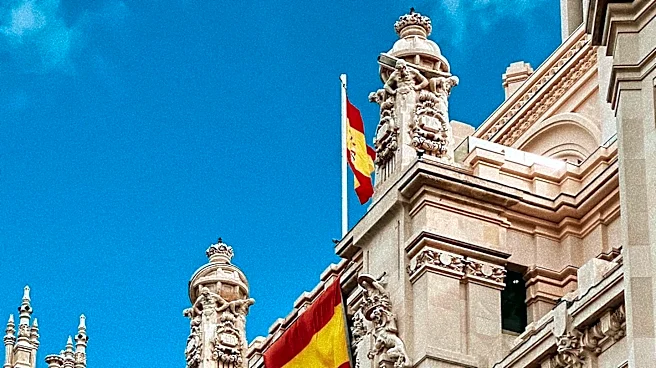
Spain has formally recognized a Palestinian state in 2024. Spanish Prime Minister Pedro Sánchez has been a vocal critic of Israel's actions in Gaza, labeling them as a "genocide" and describing Europe's broader response to the situation as a "failure."
This move by Spain aligns with a more assertive foreign policy stance taken by Sánchez, who has also previously challenged U.S. military actions in the Middle East. His government has implemented a range of progressive policies domestically and has increasingly positioned itself as a leading left-wing voice on the global stage.
Why It's Important?
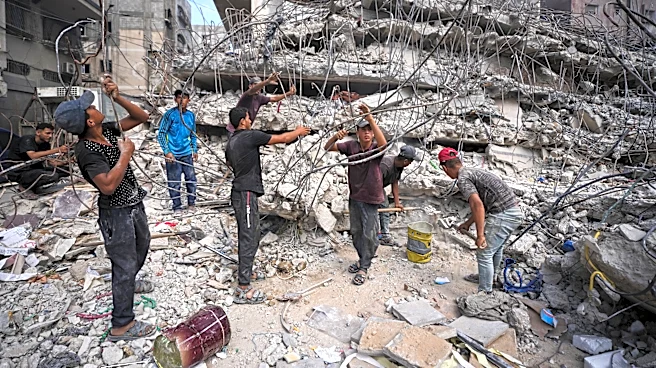
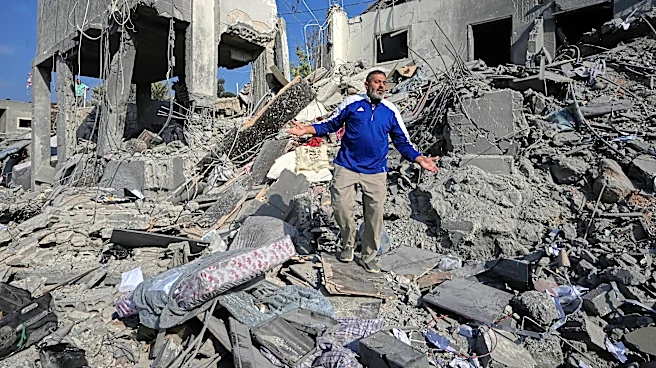
Spain's formal recognition of a Palestinian state carries significant diplomatic weight, potentially influencing other European nations to follow suit and increasing international pressure on Israel. This action reflects a growing divergence within the European Union regarding the Israeli-Palestinian conflict, with some member states adopting a more critical stance towards Israel's conduct in Gaza. Prime Minister Sánchez's strong condemnation of Israel's actions as "genocide" and his critique of Europe's response as a "failure" could further strain diplomatic relations and highlight divisions within the international community. For the U.S., this development complicates efforts to maintain a unified front on Middle East policy and could impact future peace initiatives, especially if more countries recognize a Palestinian state without a negotiated settlement. It also underscores the increasing global scrutiny of the humanitarian situation in Gaza and the demand for a political resolution.
What's Next?
Spain's recognition could encourage other European nations to consider similar diplomatic steps, potentially leading to a broader shift in international policy regarding the Israeli-Palestinian conflict. This move is likely to be met with strong reactions from Israel, which views such recognitions as premature and counterproductive to a negotiated peace. The U.S. will likely continue to advocate for a two-state solution achieved through direct negotiations, rather than unilateral recognition. The Spanish Prime Minister's continued outspokenness on international issues suggests he will maintain his critical stance, potentially leading to further diplomatic friction with both Israel and some of its allies. The long-term impact on the peace process remains to be seen, but it certainly adds another layer of complexity to the already intricate geopolitical landscape of the Middle East.
Beyond the Headlines
Beyond the immediate diplomatic implications, Spain's decision reflects a broader trend of some European leaders asserting more independent foreign policy positions, even when it means diverging from traditional allies like the U.S. and Israel. Sánchez's willingness to use strong language like "genocide" indicates a moral and ethical dimension to his foreign policy, aiming to position Spain as a champion of human rights on the global stage. This could also be seen as a strategic move to bolster his domestic political standing by appealing to progressive voters. The move highlights the ongoing debate about the effectiveness of traditional diplomatic approaches versus more assertive, unilateral actions in resolving protracted conflicts. It also brings to the forefront the question of international accountability for actions in conflict zones and the role of individual nations in shaping global norms and international law.