
What's Happening?
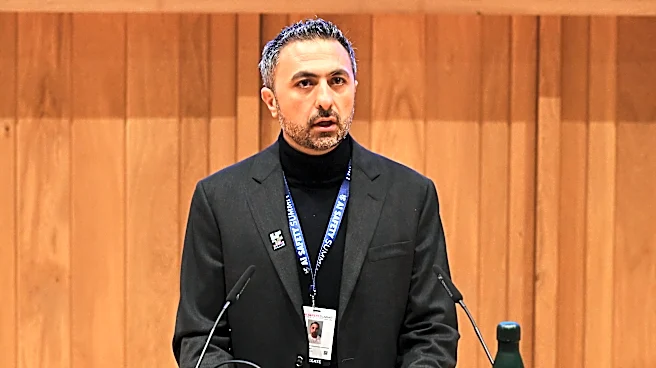
The Council on Foreign Relations (CFR) recently hosted a discussion focused on AI safety and governance. The panel addressed recent developments concerning the White House’s super intelligence task force
and its interactions with leading AI and technology companies. The core of the discussion revolved around the governance of safety and risk management in the development of frontier AI. This event highlights the ongoing efforts to establish frameworks and protocols for the responsible advancement of artificial intelligence, particularly as the technology becomes more sophisticated and its potential impacts more profound. The CFR, an independent, nonpartisan member organization, think tank, and publisher, frequently convenes such discussions to analyze and inform public policy on critical global issues.
Why It's Important?
The discussion on AI safety and governance at the Council on Foreign Relations is critically important for the U.S. and global technology landscape. As AI capabilities advance rapidly, concerns about ethical implications, potential misuse, and unforeseen risks are escalating. The engagement between the White House task force and major tech companies signifies a concerted effort by the U.S. government to proactively address these challenges. Establishing robust governance frameworks is essential to ensure that AI development aligns with societal values, protects national security interests, and maintains public trust. Without clear guidelines, the rapid proliferation of advanced AI could lead to significant societal disruptions, economic inequalities, and even geopolitical instability. This dialogue helps shape future regulations, industry standards, and international collaborations, impacting how U.S. tech companies operate and compete on a global scale, and influencing the responsible deployment of AI across various sectors.
What's Next?
The ongoing dialogue between the White House’s super intelligence task force and leading AI companies, as highlighted by the CFR discussion, suggests a continued push towards developing comprehensive AI safety and governance policies. Future steps will likely involve the formulation of specific regulations, industry best practices, and potentially international agreements to manage the risks associated with frontier AI. Stakeholders, including government agencies, tech corporations, academic institutions, and civil society groups, will continue to engage in these discussions to refine approaches to AI development and deployment. The outcomes of these deliberations could influence research priorities, investment strategies in AI, and the competitive landscape for U.S. technology firms. There is also an expectation for increased transparency and accountability from AI developers, with potential for new oversight bodies or mechanisms to ensure adherence to safety and ethical guidelines.
Beyond the Headlines
The focus on AI safety and governance extends beyond immediate regulatory concerns, touching upon fundamental questions about the future of human-technology interaction and societal control. The discussions at CFR reflect a growing awareness that AI, particularly super intelligence, could fundamentally alter economic structures, labor markets, and even the nature of warfare. The emphasis on risk management in frontier AI development points to a deeper ethical consideration of what it means to create autonomous systems with capabilities surpassing human intellect. This ongoing conversation could lead to a re-evaluation of educational curricula, a shift in research funding towards AI ethics and safety, and a broader public discourse on the long-term implications of advanced AI. The involvement of a nonpartisan body like CFR underscores the need for a balanced and informed approach, free from immediate political pressures, to address these complex and far-reaching challenges.