






What's Happening?
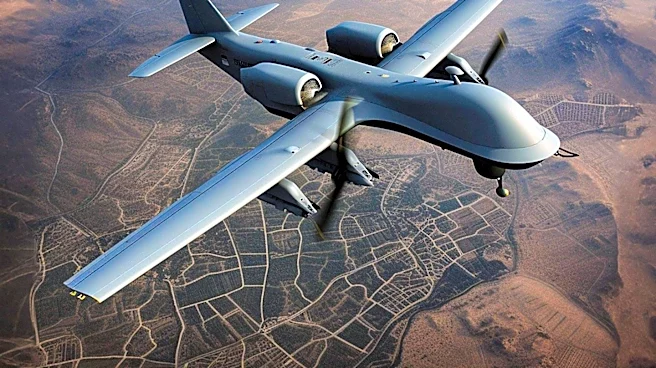
Drones are rapidly evolving in modern warfare, akin to fruit flies in their speed of adaptation, according to military analysis. This rapid evolution is most clearly demonstrated in the skies over Ukraine, where Russian Geran drones (Iranian Shahed variants)
have undergone significant transformations in response to Ukrainian countermeasures. Initially, Russia used simple piston-engine drones with satellite navigation. Ukraine countered with electronic warfare to jam receivers, prompting Russia to develop jamming-resistant receivers and new antenna patterns. As Ukraine improved tracking and interception, Russia added cameras and communications for in-flight redirection. Ukraine then deployed cheap interceptor drones. Russia responded with increased speed, introducing jet-powered variants like the Shahed-238 and later developing its own Geran-3, Geran-4, and Geran-5 models with redesigned airframes and Chinese turbojets. This constant cycle of adaptation has seen Geran drones incorporate new navigation, communications, payloads, propulsion, and airframe designs within a few years, forcing Ukraine to continuously adapt its defenses, including deploying faster interceptors.
Why It's Important?
The rapid evolution of drones signifies a paradigm shift in military technology and strategy. Unlike traditional weapons systems that take years or decades to develop, drones can morph in shape and function within weeks, allowing for quick responses to battlefield challenges. This accelerated adaptation creates a dynamic arms race where each side's innovation forces the other to invest in expensive countermeasures. For instance, Ukraine's initial success against propeller-driven Gerans (over 90% interception) dropped to around 60% against jet-powered models, which fly higher and require more costly defenses like fighter sorties and scarce missiles. This forces adversaries to constantly re-evaluate their defense strategies and resource allocation. The ability to rapidly iterate and deploy new drone generations can provide a significant tactical and strategic advantage, allowing a military to dictate where an adversary spends its resources and engineering efforts, potentially rendering existing defenses obsolete quickly.
What's Next?
The US military is exploring ways to deliberately accelerate drone adaptation, not just in combat but through rigorous training and testing. The goal is to create a continuous cycle of evolution by changing threat environments every few months and challenging multiple teams to produce successive generations of drones. This approach aims to identify which technologies and teams can consistently produce scalable solutions as conditions shift. Experiments would measure the time required for every stage of a generation, from design to manufacturing and deployment, to pinpoint bottlenecks in the adaptation process. The military seeks to learn which inexpensive adaptations can force expensive and time-consuming responses from an opponent, such as a software change requiring hardware redesign or a system redesign necessitating factory overhauls. This proactive approach aims to gain a decisive advantage by fielding new generations faster than adversaries can respond.
Beyond the Headlines
The concept of treating drones like 'fruit flies of warfare' highlights a fundamental shift in military R&D and acquisition. It moves away from long, linear development cycles towards a more agile, iterative, and evolutionary approach. This has profound implications for defense industries, requiring them to adopt rapid prototyping, modular designs, and flexible manufacturing processes. Ethically, the rapid evolution of autonomous or semi-autonomous weapons systems raises questions about accountability, control, and the potential for unintended consequences. Legally, existing arms control treaties may struggle to keep pace with technologies that can change function and form so quickly. Culturally, this shift demands a military mindset that embraces constant change, experimentation, and even planned obsolescence, moving away from the traditional emphasis on long-term platform stability. The long-term impact could be a perpetual state of technological arms race, where the advantage lies with those who can adapt the fastest.