








What's Happening?
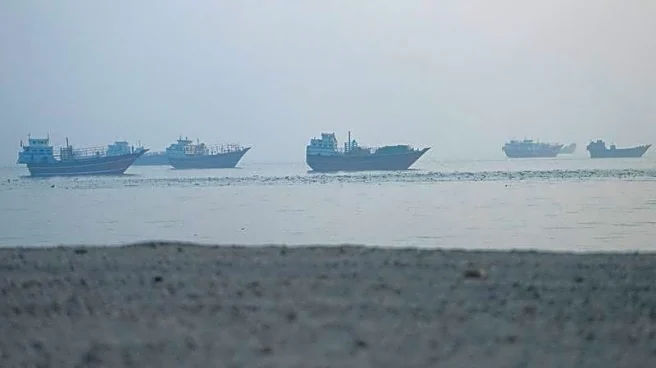
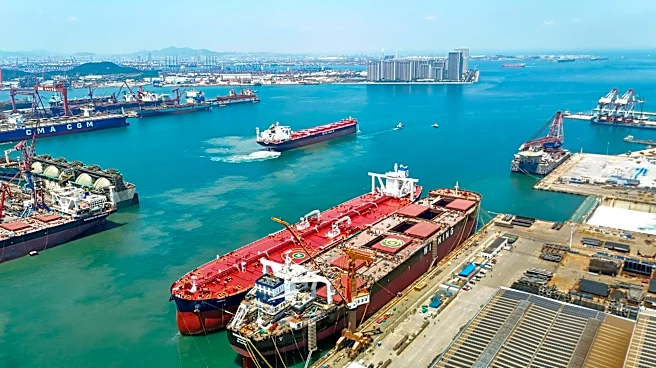
Global shipping companies are cautiously optimistic about resuming transit through the Strait of Hormuz following a U.S.-Iran agreement to reopen the waterway. The deal aims to end the conflict that has largely halted shipping through the strait, a critical
route for global oil and gas supplies. Despite the agreement, shippers are awaiting further details on safety measures, including mine clearance. The shipping industry remains hesitant, with no significant increase in traffic observed. The U.S.-Iran conflict had previously disrupted the transit of vital commodities, impacting global supply chains.
Why It's Important?
The reopening of the Strait of Hormuz is crucial for global energy markets, as it is a key transit route for a significant portion of the world's oil and liquefied natural gas. The agreement could stabilize oil prices and improve supply chain reliability, benefiting industries reliant on these resources. However, the cautious approach by shippers highlights ongoing concerns about safety and the potential for renewed conflict. The situation underscores the geopolitical complexities affecting global trade and the need for robust international agreements to ensure the security of critical maritime routes.
What's Next?
Shippers are expected to resume operations gradually, contingent on assurances of safety and stability in the region. The U.S. and Iran are set to sign a memorandum of understanding, which could pave the way for normalized shipping activities. However, the process of de-mining and adjusting insurance rates may take weeks, delaying full resumption of traffic. Industry stakeholders will closely monitor the situation, with potential adjustments to shipping routes and strategies based on developments in the region.
Beyond the Headlines
The situation in the Strait of Hormuz highlights the vulnerability of global supply chains to geopolitical tensions. The reliance on a few critical maritime routes for energy transport underscores the need for diversified supply chains and alternative routes. The agreement between the U.S. and Iran may serve as a model for conflict resolution in other regions, promoting diplomatic solutions to ensure the stability of global trade. The incident also raises questions about the role of international organizations in maintaining maritime security and the effectiveness of existing frameworks in addressing such challenges.