

What's Happening?
President Trump has announced a five-day postponement of military strikes against Iranian power plants. This decision follows his earlier threat to 'obliterate' these facilities if Iran did not reopen the Strait of Hormuz within 48 hours. Trump cited
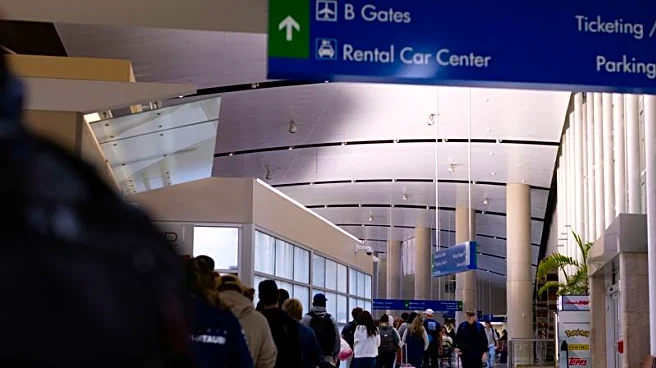
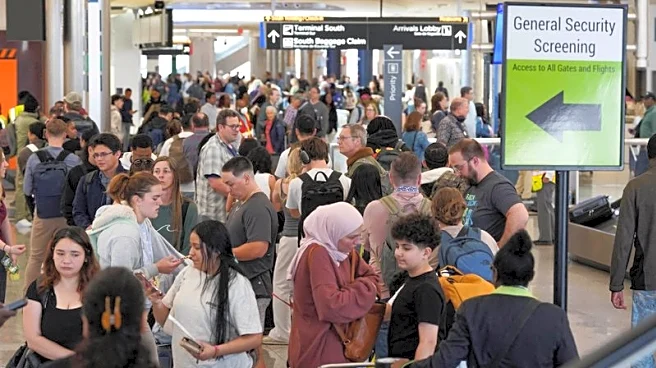
'very good and productive conversations' as the reason for the delay, indicating that the postponement is contingent on the success of ongoing discussions. Concurrently, Trump has ordered the deployment of hundreds of Immigration and Customs Enforcement (ICE) agents to U.S. airports. This move aims to address staffing shortages and long security lines at airports, exacerbated by a lack of funding for the Department of Homeland Security (DHS). The deployment is part of a broader strategy to support Transportation Security Administration (TSA) officers amid increasing traveler frustrations.
Why It's Important?
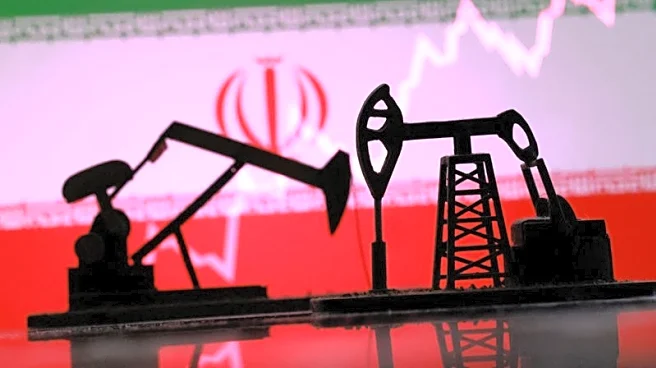
The postponement of military action against Iran is significant as it temporarily eases tensions in a region critical to global oil supply. The Strait of Hormuz is a vital passageway for oil shipments, and any conflict could disrupt global markets. Domestically, the deployment of ICE agents to airports highlights ongoing challenges in U.S. immigration policy and airport security management. The DHS funding impasse has led to operational disruptions, affecting TSA employees and causing delays for travelers. The situation underscores the broader political divide over immigration enforcement and funding priorities, with potential implications for national security and public convenience.
What's Next?
The next steps involve monitoring the outcomes of the U.S.-Iran discussions to determine if the postponement of military action will lead to a more permanent resolution. In the U.S., Congress faces pressure to resolve the DHS funding deadlock, which is crucial for restoring normal operations at airports. The ICE deployment may face scrutiny regarding its effectiveness and the roles agents will play in airport security. Political leaders and stakeholders will likely continue negotiations to address these issues, with potential impacts on future immigration and security policies.