



What's Happening?
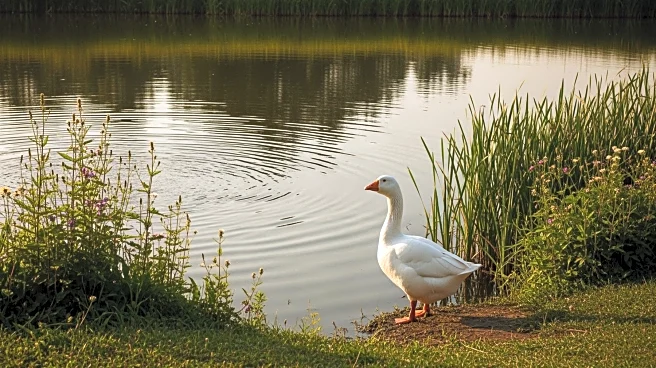
In the market town of March, Cambridgeshire, a unique real estate listing has caught the attention of potential buyers. Taffy Stevens, a homeowner in the area, is selling his house with an unusual inclusion: a resident goose named Gary. Gary, described
as a 'bit anti-social,' has made Stevens' riverside garden his home for several years. The goose, part of a local gaggle known for roaming the streets and using pedestrian crossings, has become a fixture in the community. Stevens, who has cared for Gary since the goose arrived four months after he moved in, insists that Gary is part of the property deal. The goose has been a local celebrity, with residents often stopping by to feed him. Stevens even built a ramp to facilitate Gary's movement between the garden and the river.
Why It's Important?
This story highlights the unique cultural and social dynamics within small communities. The inclusion of Gary the goose in the property sale underscores the strong bond between residents and local wildlife, reflecting a broader societal trend of integrating nature into urban living spaces. For potential buyers, the presence of Gary offers a distinctive lifestyle choice, blending traditional homeownership with a commitment to local wildlife. This situation also illustrates the importance of community identity and the role of local stories in shaping real estate markets. The decision to include Gary in the sale could influence property values and buyer interest, particularly among those who value community engagement and environmental stewardship.
What's Next?
As the house sale progresses, potential buyers will need to consider their willingness to adopt Gary as part of their new home. This could set a precedent for future property sales in the area, where unique local features become selling points. The community's response to the sale will likely influence how other residents approach similar situations, potentially leading to more wildlife-friendly real estate practices. Additionally, the story of Gary may inspire other towns to embrace their local wildlife, fostering a greater appreciation for the natural environment within urban settings.