



What's Happening?
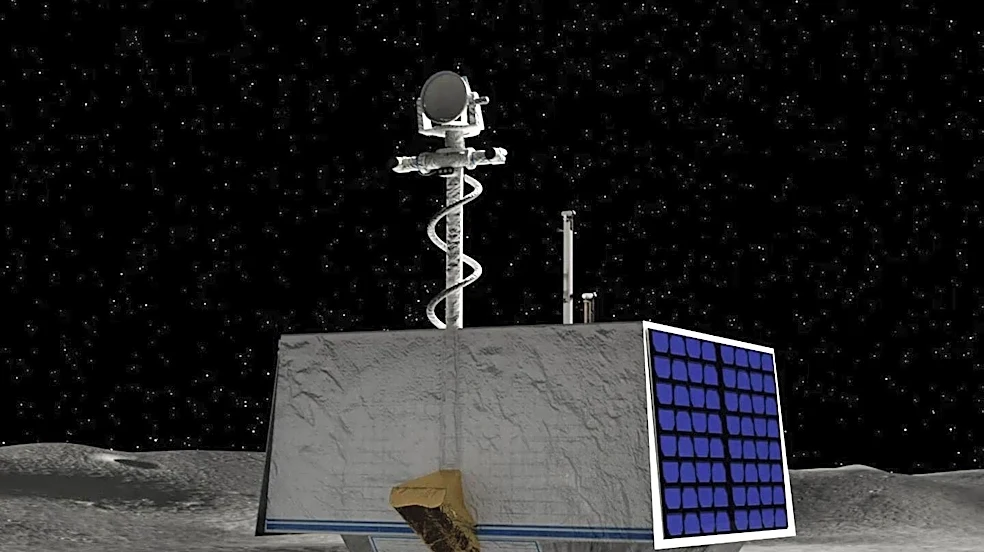
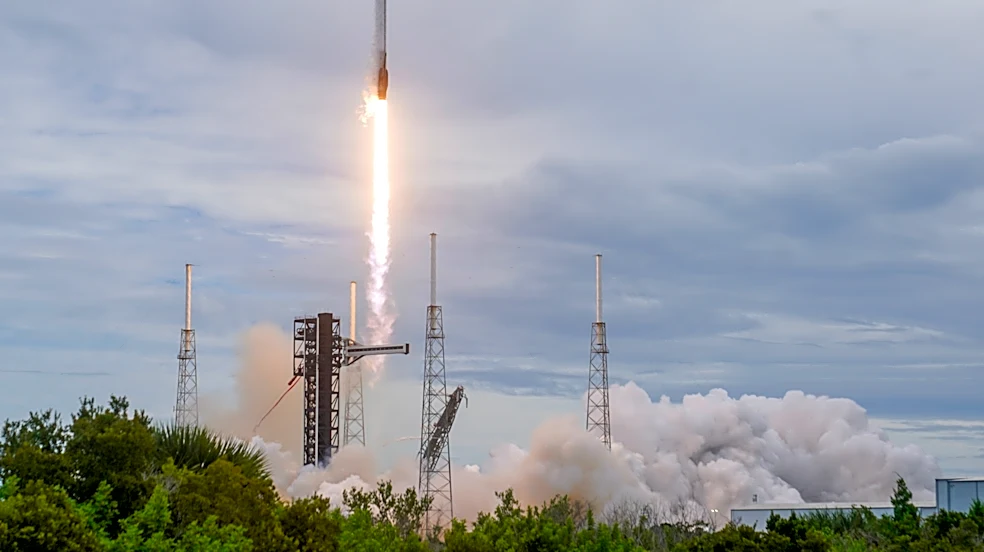
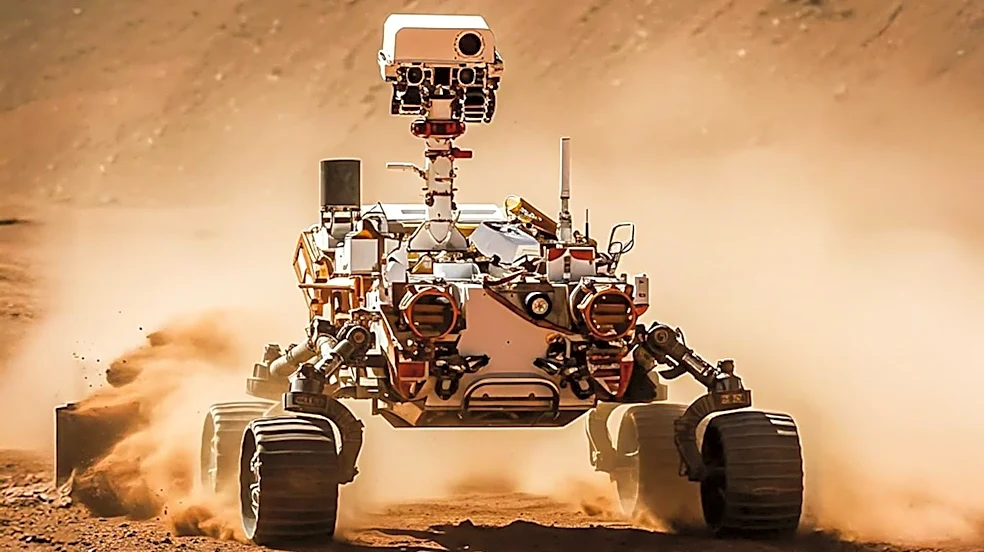
US company Astrolab plans to dispatch its uncrewed FLIP rover to the Moon's south pole later this year. This mission, part of Griffin Mission 1 using Astrobotic's Griffin lander, will carry Hewlett Packard Enterprise's (HPE) Spaceborne Computer-4, a high-performance
computing module. This endeavor marks the first anticipated test of high-performance computing and artificial intelligence (AI) technologies directly on the lunar surface. Astrolab founder and CEO Jaret Matthews confirmed that a graphics processing unit (GPU) will also be tested on the Moon for the first time. Astrolab is one of two companies selected by NASA to develop a crewed rover under the Artemis program. The Spaceborne Computer-4 is designed to be compact, lightweight, autonomous, and fanless, equipped with a 64-bit central processing unit, a GPU, and KIOXIA solid-state drives. It will be connected to FLIP's cooling system and powered by the rover's batteries and solar cells. The equipment, made from thermally conductive aluminum, is built to withstand the extreme conditions near the Moon's south pole, including lunar nights exceeding 150 hours, with an expected operational lifespan of one year.
Why It's Important?
This mission represents a significant leap in space exploration technology, particularly for lunar missions. Testing high-performance computing and AI directly on the Moon's surface will provide invaluable data on how these advanced systems perform in extreme extraterrestrial environments. The ability to process data and make decisions autonomously on the Moon, rather than relying solely on Earth-based command, will enhance the efficiency and safety of future lunar operations. This is crucial for the Artemis program's long-term goals of establishing a sustained human presence on the Moon. The development of robust AI for navigation without GPS, terrain analysis, and hazard avoidance will be vital for rovers exploring complex lunar landscapes, especially in regions like the south pole, which are of high scientific interest due to potential water ice. Success in this mission could pave the way for more sophisticated robotic and crewed missions, reducing communication delays and increasing the scope of scientific discovery.
What's Next?
During the lunar mission, the HPE computer on the FLIP rover is expected to analyze visual data and support autonomous observations, navigation, mapping, and terrain analysis. Planned experiments include the use of localization software developed at NASA’s Jet Propulsion Laboratory, previously utilized on Mars. A machine-learning algorithm will compare local terrain features with a stored map to help the rover determine its location without GPS and avoid hazards like craters. In addition to FLIP, Griffin-1 will deliver CubeRover, the LandCam-X optical navigation system, and the Nanofiche GLPH miniature archive of human history. The data gathered from these tests will be critical for refining AI and computing systems for future lunar and deep-space missions. The insights will directly inform the development of crewed rovers for the Artemis program, ensuring that future human explorers have reliable and intelligent robotic support. Continued advancements in this area will be essential for NASA's long-term vision of lunar exploration and eventual human missions to Mars.
Beyond the Headlines
The deployment of advanced AI and high-performance computing on the Moon has broader implications for the future of space autonomy and the potential for off-world infrastructure. By enabling rovers to operate more independently, this technology reduces the need for constant human intervention, freeing up valuable crew time and mitigating risks associated with communication delays. This could lead to a paradigm shift in how space missions are designed and executed, moving towards more self-sufficient and adaptive systems. Furthermore, the development of AI capable of navigating and analyzing unknown extraterrestrial environments could have applications beyond space, such as in autonomous vehicles or disaster response on Earth. The mission also highlights the growing collaboration between government space agencies like NASA and private companies like Astrolab and HPE, fostering a new era of commercial space exploration and technological innovation. This blend of public and private sector expertise is accelerating the pace of discovery and pushing the boundaries of what's possible in space.